

‘Tony’
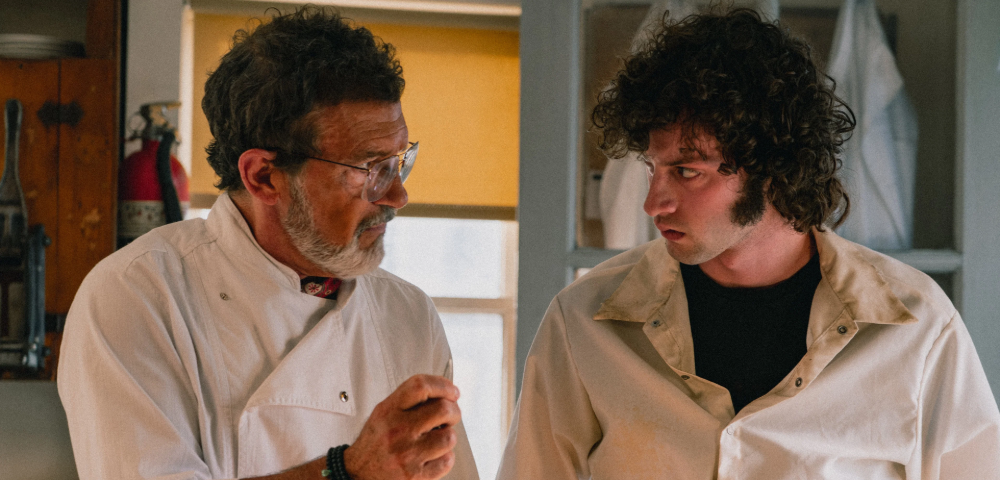
Image: Dominic Sessa and Antonio Banderas in 'Tony'. Photo credits: TMDB
A coming-of-age story with a culinary icon at its centre, Tony is a sweet, sweltering and surprisingly scruffy portrait of Anthony Bourdain before the legend, when he was mostly just a cocky young shit who needed to find something worth caring about. Simple but effective, it is a great story that happens to be a biopic, grounded by lived-in performances and a quietly winning character arc.
Directed by Matt Johnson, Tony drops us into the young Bourdain’s life after he is rejected from a writing fellowship and follows a girl to Providence. With no fellowship to speak of, he talks his way into a restaurant job, pretending he is there to write a book. He starts washing dishes, spinning increasingly elaborate lies and generally thinking considerably more of himself than anyone else does.
It is not exactly a flattering introduction. The film even opens with Bourdain describing his younger self as arrogant, full of himself and desperately in need of an ass-kicking. He is constantly explaining Latin words, embellishing his achievements and conning people for his own gain. Yet what begins as irritating gradually becomes compelling as Tony starts cooking, discovering that he might actually have something worth giving a shit about.
That growth is deliberately quiet. There is no grand epiphany, just a gradual shift from performing a version of himself to actually becoming someone. His mentor, a once-renowned chef played with gruff warmth by Antonio Banderas, helps Tony discover the empathy and connection that can come from food, while cooking gives his restless ambition somewhere to land. It is a lovely relationship precisely because the film never beats us over the head with its importance.
Santi is an equally strong leading man, proving he is no one-trick pony as he embodies Tony’s particular cocktail of arrogance, insecurity and sheer loser energy. He makes it believable that we can spend the first half wanting to shake Tony and the second quietly rooting for him. Leo Woodall is terrific as Sal, a lazy-smiling storm of drugs, hookups and bad decisions who initially takes Tony under his wing. He is a magnetic but rotten influence, embodying the darker path Tony could easily have taken.
The ensemble is excellent throughout, with natural banter and chemistry making the restaurant feel genuinely lived in rather than like a collection of actors waiting for their lines. Johnson gives the film a warm, grainy intimacy, capturing the sweaty summer-job atmosphere of Providence through beaches, docks, parties and kitchens. Kinetic editing and brisk pacing keep the simple story moving without making it feel frantic.
The romance, however, is the one conspicuously undercooked element. The chemistry is warm enough, but it is hard to buy that this young woman is so completely fooled by Tony when we have just watched him lie about practically everything. It feels less like a deliberate character contradiction than a screenplay convenience.
Still, Tony wisely avoids the usual biopic bloat. With conflated characters and liberties taken with Bourdain’s real story, this is less a definitive portrait than a snapshot of one formative chapter. And perhaps that is exactly why it works. It does not need to explain the whole man to understand him.
Even without knowing Bourdain, there is something universal here: the messy, uncomfortable process of finding yourself by finding something you genuinely love. Tony may not be revelatory, but it is charming, funny and heartfelt, with just enough melancholy beneath its summer glow to remind us who this kid eventually became.
A good movie about a complicated young man learning how to stop pretending and start making something of himself, Tony is an unexpectedly human tribute to a man who spent much of his life telling stories about who he was.









Leave a Reply