

High-Rise Residential Fears For Historic Yasmar Estate In Haberfield
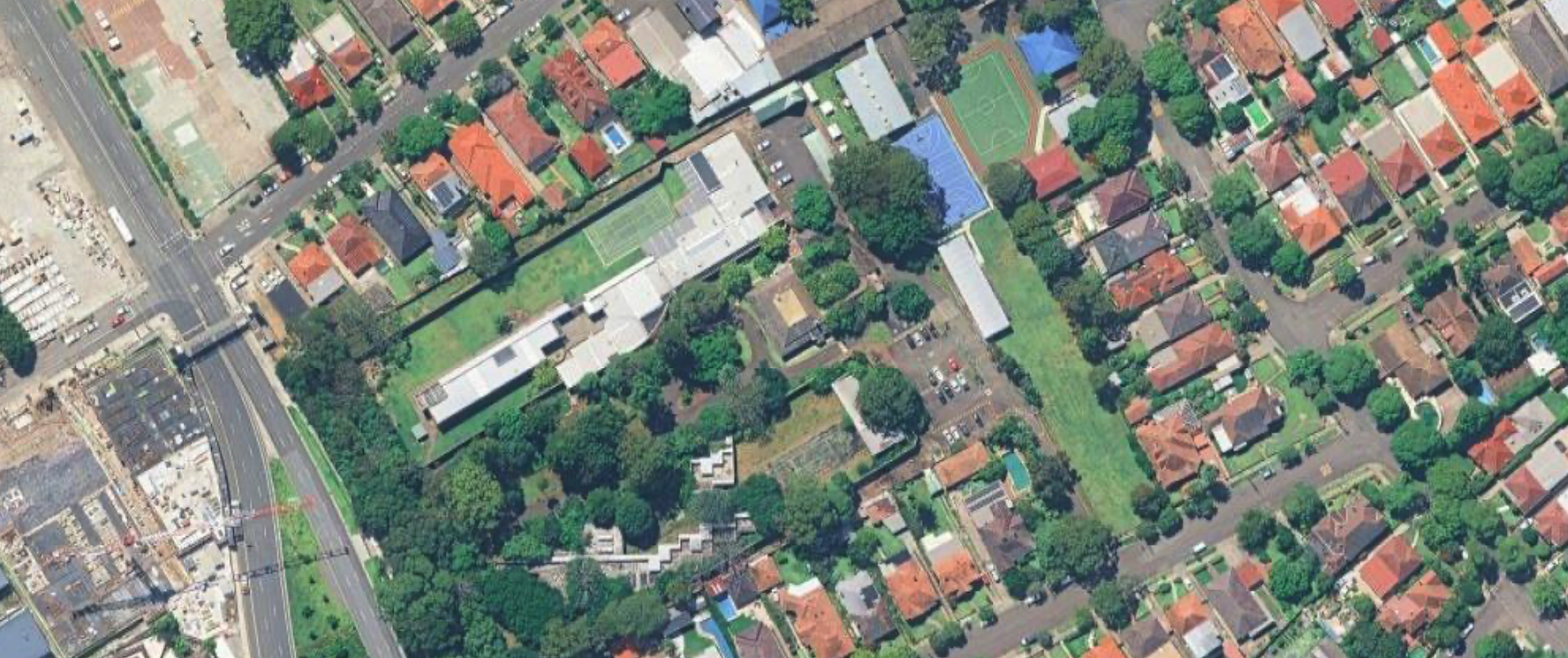
Image: Google Maps
A proposal by the Metropolitan Local Aboriginal Land Council has ignited fears that towers may be built on the grounds of a Victorian era homestead, in the heritage suburb of Haberfield. But, a vision of the residential development is yet to be unveiled.
The land council is seeking to erect 200 units on the Yasmar estate. They would be located within metres of Yasmar house, built in the 1850s as the home of Mary Louisa and Alexander Learmonth. Mary Lousia was the daughter of pioneers Sarah Anne and David Ramsay, who in 1805 were gifted what was then Dobroyde — now Haberfield — by the Third Fleet convict-turned-magistrate Simeon Lord, Sarah Anne’s father.
The 2.4 hectare site has seen a succession of subsequent uses, including as a Sunday school, children’s court and detention centre. 1.5 hectares of it are owned by the land council, following a 2022 ruling based on New South Wales legislation that allows for the transfer of unused Crown land to Aboriginal land councils.

Detailed plans are not yet known, but are expected to be revealed by early next year with the publication of an Environmental Impact Statement. The land council says that the development will be confined to the footprint of the former detention centre.
The proposal is being pursued through the Housing Delivery Authority, which accepted an initial Expression of Interest.
Historic neighbourhood
Haberfield has been cited as the oldest and most intact exemplar of the ‘garden suburb’ movement, which emerged in the 1890s and 1900s in England, envisioning laneless, publess neighbourhoods with spacious single-floor homes on generous plots of land. The notion was to combine the benefits of city and country living; walking Haberfield’s leafy streets, one feels that it could be a country town. The suburb constitutes a Heritage Conversation Area.
Prior to the neighbourhood’s development in the 1900s, it had been inhabited by local Aboriginal people, as one of the last parts of the Inner West to be developed. It is located along what was a border region between the Wangal and Cagidal clans of the Darug people.
Its visual character is fiercely defended by residents, some of whom established the Haberfield Association in 1980 to oppose incongruous developments and advocate for heritage protections.
Extrapolating from the number of residences being proposed, the association has speculated that three or four high-rise buildings of up to eight storeys might be built.
Aesthetic and traffic impacts feared
Haberfield Association president Brett Burton said that the erection of residential towers “would be inconsistent with the built heritage of Haberfield” and would negate “the whole point” of the garden suburb.
“I think everyone would have a concern around traffic, both in and out of Parramatta Road. If that’s not the place where they’re going to exit the properties, it would have to be through Chandos Street, and it’s only single one-way from Chandos Street into the site. So they’ll either have to buy one of the homes and knock it down, or cut into the school.”
Plans not yet known
Burton stressed, however, that the plans are yet to be seen. “I have more questions than I have answers on this.”
Earlier this year, Kristian Morris of Ray White Commercial wrote, “I wouldn’t lose sleep over high-rise towers next to the Federation cottages. The planning landscape simply doesn’t support it.”
“A culturally sympathetic, mixed-use, low-rise activation, the sort of thing the Metro LALC itself has described, is far more likely to find a path through the system.”
The Metropolitan Local Aboriginal Land Council and Summer Hill MLA Jo Haylen were contacted for comment.







Thanks for highlighting the issues around the proposed development on Yasmar Estate.
As with so much development happening around Sydney, residents need to be informed.
A global view of the concentration of development in the Inner West, that includes both Council and NSW govt proposals would give a great insight to what is really happening.
Any Gov statements about supporting infrastructure, or lack of, would also be insightful.
Many thanks
Karen