
‘Palestine 36’ Is Important, But Is That Enough?
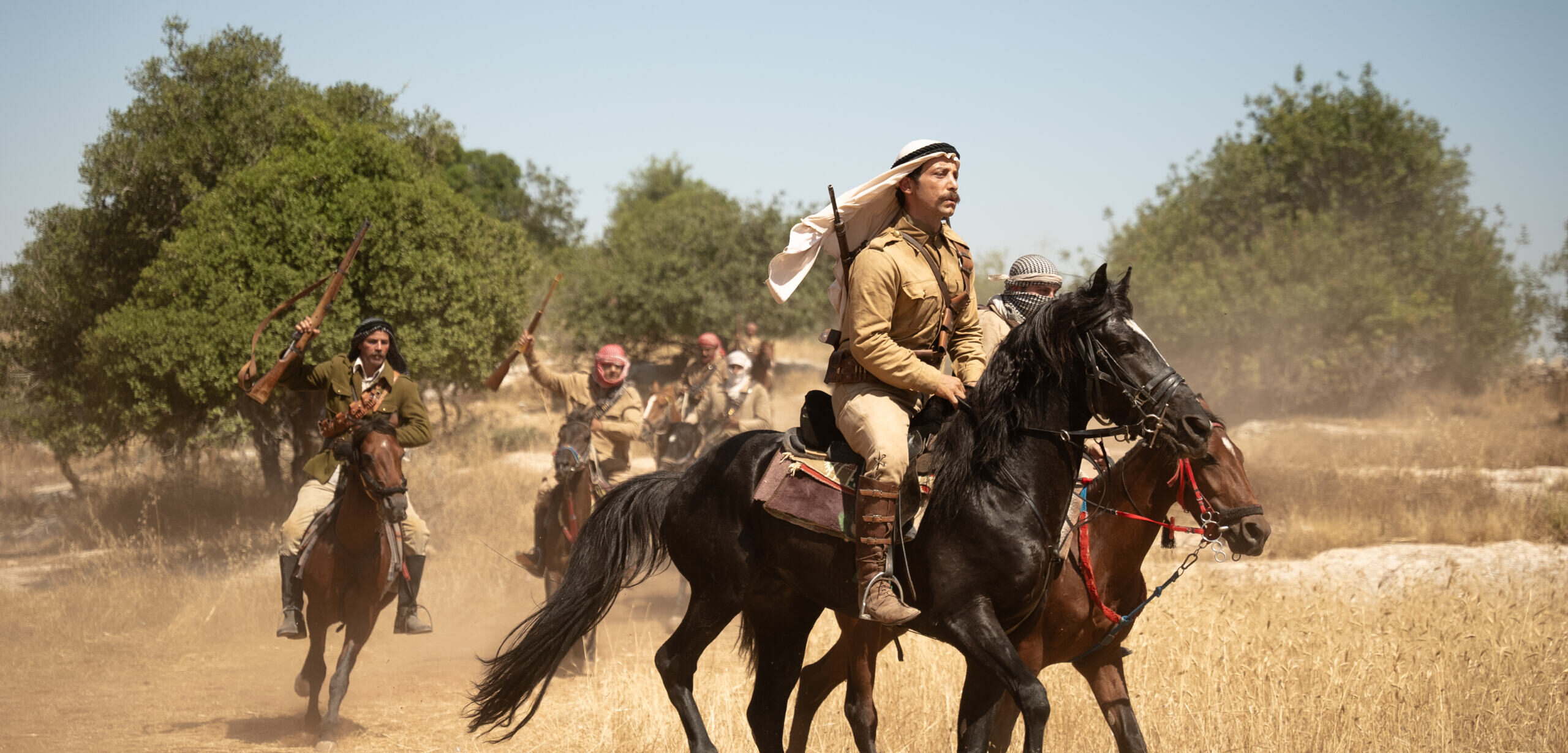
Image: Source: Cultural Media
It feels strange to talk about Palestine 36 in the traditional way you would discuss any other newly released film. Undoubtedly, it is a form of political imagemaking that seeks to tell parts of Palestinian history that have unfairly been erased, which is a mission statement I can undoubtedly get behind.
But the reason why Palestinian filmmaker Annemarie Jacir’s work is so important is also its very same problem – it feels more like a history lesson than a film. For me, it created a strange paradox where I could acknowledge that Palestine 36’s recounting of the country’s revolt against British colonial rule was crucial, yet was unable to stir me in a significant way.
Perhaps it’s because I was unfairly using The Voice of Hind Rajab as a measuring stick for Palestinian stories on film, but Palestine 36 does not necessarily feel like an artfully constructed film in its own right, but like a movie you watch to learn more about an important topic. For some, that will be enough; for me, it wasn’t.
More a history lesson than a film
To rip the biggest band-aid off, part of that lies in the film’s seeming usage of generative AI to restore colour and restore old footage from Mandate Palestine. I’m sorry to say, but these sequences look absolutely awful and make what is presumably real footage look like it was created in the uncanny valley.
Although I appreciate the film’s significance and its status as the only feature film to be shot in Palestine over the last two years of genocide in Gaza, I found this element of the film’s production hard to stomach. I understand the idea behind using historical footage and that this was likely done for budgetary reason, but this obviously artificial upscaling had the opposite effect and often made me wonder if what I was seeing was actually real, which feels like the opposite of what was intended.
Even despite the surprisingly high amount of AI-“enhanced” footage, I nonetheless found it difficulty to properly connect with Palestine 36 given the wide time period it covers. The film’s characters, with a few exceptions, don’t really feel like “people” but more archetypes of Palestinian life at the time. Only one character really feels like a “real person”, that being Yasmine Al Massri’s wonderfully played Khuloud Atef.
A fiercely opinionated journalist publishing opinion pieces under a pen name, she is by far the best character in Palestine 36 and also responsible for its best scene: the moment where the result of the Peel Commission is announced over the radio while she and her businessman husband Khalid (Saleh Bakri) listen in, becoming increasingly devastated as the broadcast continues.
Palestine 36 is historical, but lacks feeling
This particular moment works extremely well because Palestine 36 is able to frame this announcement as a culmination of the pair’s relationship up until that moment. It’s smart writing that depicts history as happening to and having a huge impact on real people, mainly because these characters have received the best development within the Jacir’s up until that point. Unfortunately, the other characters simply do not receive this level of care, such as Karim Daoud Anaya’s chronically underutilised Yusuf.
In simpler terms, the film lacks a level of feeling that makes other recent efforts to document Palestinian history on film feel like genuinely urgent pieces of art. The Voice of Hind Rajab is so impactful precisely because it is also a fantastically made film. It utilises film as a medium to put us in the shoes of the Red Crescent workers to evoke a feeling, rather than to simply tell us what happened.
Truly horrible things happen to people in Palestine 36 for sure, and the very depiction of early 20th-century Palestinian history on-screen is politically audacious in itself. Yet as both a cinematic experience and history lesson, I sincerely found it difficult to connect with compared to both other films and actual history books like Rashid Khalidi’s The Hundred Years’ War on Palestine.
It means for me that unfortunately, no matter how important what it has to say is, I did not find Palestine 36 to be a particularly engaging film. I am glad this film exists and the more Palestinian stories told on-screen, the better – but it should serve simply as a gateway for further learning, not the sole engagement someone should have with Palestinian history or filmmaking.
Palestine 36 is in cinemas now.








Leave a Reply