‘The Devil Wears Prada 2’: A Glossy Reunion With Good Company
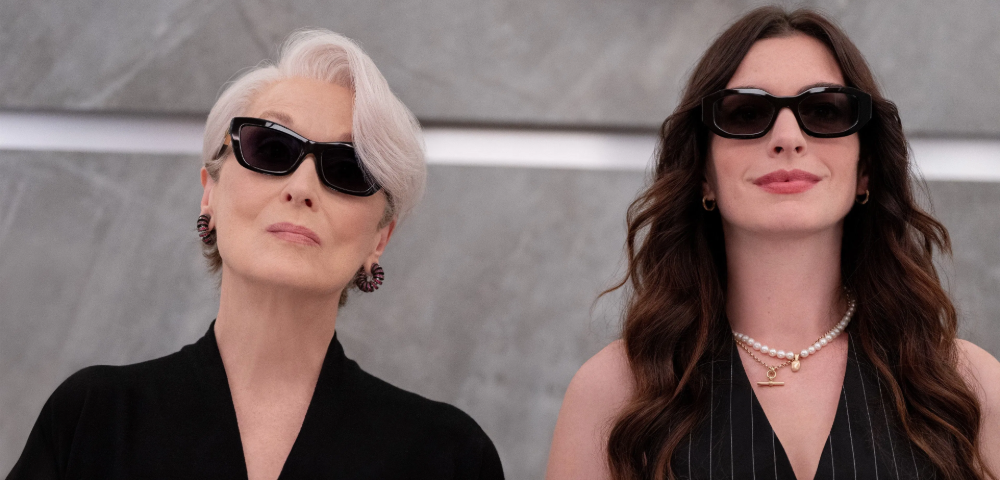
Image: Meryl Streep and Anne Hathaway in a still from 'The Devil Wears Prada 2.' Source: TMDB.
Softer, glossier, and far less mean than the original—but for the girls, dolls, and gays, The Devil Wears Prada 2 still feels like coming home.
Director David Frankel and writer Aline Brosh McKenna return to a landscape almost unrecognisable from the one it first skewered.
Print is dying, brands rule editorial, AI looms over every creative industry, and even Meryl Streep’s Miranda Priestly must now navigate the reality of HR departments and Gen Z optics.
While the film understands this, what it lacks in its predecessors’ icy bite, it makes up for in warmth, wit, and an understanding of how these characters have aged alongside the world around them.
It’s also worth remembering what The Devil Wears Prada meant—and to whom.
Despite little explicit queer representation beyond Stanley Tucci’s Nigel, the film endures as a queer cultural touchstone through its stunning fashion, diva worship, and deliciously charged dynamics.
LGBTQIA+ audiences latched onto it all—especially Streep in one of her most iconic and stunning roles—while Andy’s (Anne Hathaway) glow-up became its own kind of became its own aspirational fantasy and cautionary tale.
Ambitious, barb-tongued, and camp in the most operatic sense, the film’s been memed into immortality because it was so alive, some might even say groundbreaking.
The Devil Wears Prada 2 inherits that legacy wisely, even if it occasionally feels like a very affectionate veneer.
Andy Sachs, now an established journalist blindsided by layoffs, collides once again with Runway amid an image-rehab campaign and Miranda’s own ambitions. It’s a fun setup, even if the film loses itself at times under the weight of too many competing subplots.
The humour is similarly uneven: when they land, they’re fun and witty; when they don’t, they’re broad enough to feel imported from another film.
Like the original, it takes time to find its rhythm. But once it does, it takes off strutting.
What’s most impressive is how naturally the sequel folds contemporary anxieties into its world. Conversations around media collapse, and creatives being quietly pushed aside by algorithms never feel stuffed in.
The film recognises that fashion and publishing no longer operate with the unchecked cruelty of the mid-2000s, and Miranda has evolved accordingly. Still terrifying, still razor-sharp—but there’s a self-awareness to her now, as though she understands the world no longer bends quite so easily around her.
When the subject turns to legacy and what follows, Streep lets something shift almost imperceptibly behind it all. Not necessarily softer, she plays her as someone quietly mourning what the world is phasing out. It’s her finest work in the role, even if the film ultimately wraps that mourning in too neat a bow.
Hathaway is charming, even if this older Andy leans harder into quirkiness, occasionally tipping from endearing into overly performative. She feels less grounded than her 2006 counterpart, more confident on the surface but somehow less real beneath it.
The real delight, though, is Emily Blunt: deliciously catty, softened just enough by time to become unexpectedly warm without losing her edge, and stealing every scene. The Andy-and-Emily dynamic crackles with a chemistry the film’s unnecessary romantic subplots can only dream of. Frankly, I’m rooting for them.
Justin Theroux, meanwhile, is a standout as Blunt’s hilariously awkward, tech mogul love interest. Tucci, armed with his certain elegance, remains the most effortless presence in the room. The wider supporting cast, while lived-in and likable, rarely leave much of an impression.
The central quartet’s chemistry does most of the heavy lifting, and the film leans into its own mythology with obvious pleasure—perhaps a touch too much.
Still, the easter eggs are fun, the payoffs genuinely heartwarming, and there’s real comfort in watching these characters slip into each other’s rhythms again, like pulling on an old cerulean sweater.
Visually, the film earns its budget in some propulsive, lush sequences, but otherwise settles for the flat digital sheen of modern studio filmmaking—a far cry from the grain and warmth of the original, even if the fashion never disappoints.
As legacy sequels go, this is far better than most. It could use more teeth, but it knows exactly why people loved these characters, and it has the good sense to let that be enough.
Ultimately, it’s a fun occasion, so dress up, go with your people, and ultimately feel like ‘girl who’s going to be okay,’ that’s all.
★★★1/2
The Devil Wears Prada 2 is in cinemas now.