

‘The Elevator’: A Sharp Descent From The Corporate Ladder
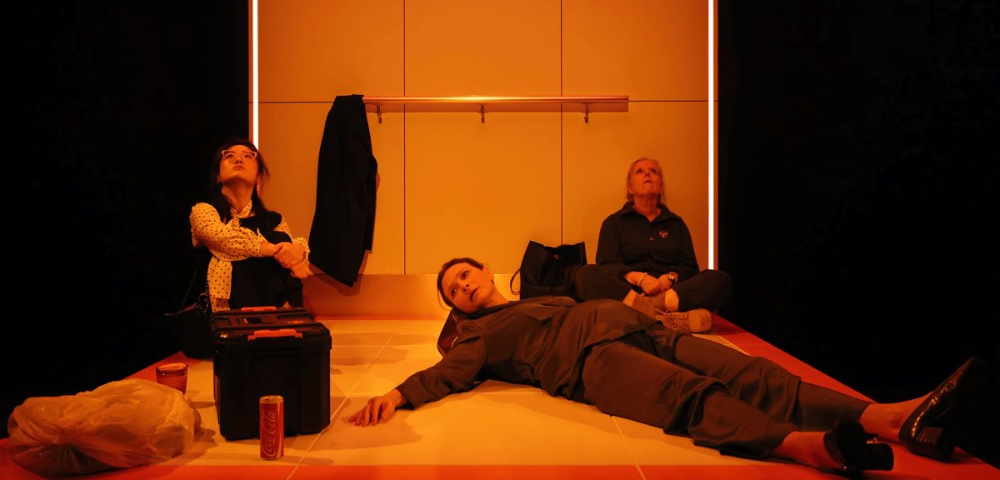
Image: Sharon Wu, Leeanna Walsman and Di Adams in Eloise Snape's 'The Elevator'. Credits: ensemble.com.au / Prudence Upton.
Wickedly sharp and tense, The Elevator is an increasingly relevant satire about what it means to claw your way to the top of the corporate ladder, even if it takes a while to get there.
Written by Eloise Snape and directed by Anthea Williams, the world premiere at Ensemble Theatre traps three women inside an AI-operated lift as Eco Engines faces their latest PR nightmare.
Margot (Leeanna Walsman), the newly returned CEO and even newer mother, is left to clean up the mess after one of the company’s self driving cars, powered by TAURUS, the company’s AI model, hits a man and leaves him critically injured.
She and eager new marketing head Alison (Shirong Wu) are scrambling over a suitably sanitised statement when they get stuck with Ollie (Di Adams), an otherwise invisible building facilities worker.
Beyond skewering big corporations, greenwashing and AI, The Elevator follows is a mostly compelling character study that eventually becomes something much more sinister, as Snape delves into what it takes for women to make it to the top and the humanity that has to be shed to stay there.
The writing is strongest when Snape lets the tension do the work, but the first half takes some getting used to as the cast finds its rhythm. As dialogue occasionally feels more written than lived-in, jokes land awkwardly and some bigger ideas arrive with the subtlety of a corporate presentation, The Elevator pushes a little too hard, initially.
But once it gets going, or halts, actually and the trio’s chemistry grows considerably as the walls close in, the show hooks you into something that feels deliciously foreboding.
Walsman brings Margot to life with an icy, calculated presence, making her hard to warm to despite the glimpses of the woman underneath and even as her body, fresh off the delivery table, refuses to cooperate, betraying the humanity she’s spent years burying.
Her eventual breakdown, a devastating reckoning confronting everything she’s sacrificed to become a CEO and what that has cost her as a mother, is one of the show’s strongest moments without ever becoming an excuse for her actions.
Wu brings much-needed levity as the desperately keen Alison, whose nervous giggling and one-liner flubs offer plenty of humour as the pressure mounts.
Adams’ Ollie is the wildcard, bringing a lifetime of experience outside the corporate bubble and little patience for the other women’s narrow definition of success. Though her “back in my day” wisdom occasionally tips into out-of-touch lecturing, but there’s enough grounded sharpness and cheek underneath it to keep her from becoming merely a mouthpiece.
Once Snape fully stops chasing laughs and lets the situation, and second half, kick in, the audience leans in. The tension cracks, the three women start to properly unravel, comedy curdles and suddenly every earlier oddity feels worth paying attention to without feeling cheap.
The Elevator might not nail every beat, but when it clicks, it hits hard enough to question plenty, from the cost of success to corporate scheming, and cement Snape as a playwright worth watching.
Eloise Snape’s The Elevator is running till 18 October at Ensemble Theatre.







Leave a Reply