
‘Eureka Day’: Biting Social Satire Feels Especially Timely
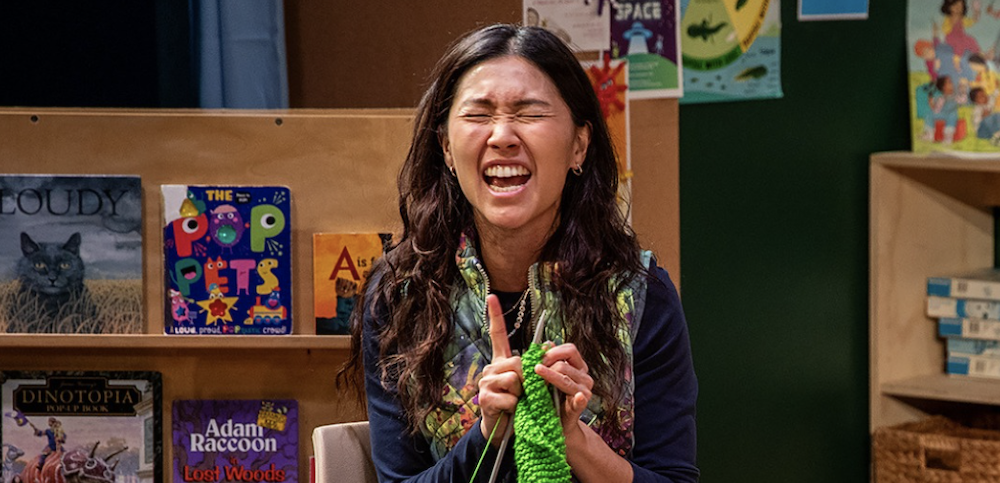
Image: seymoursydney / Instagram
A is for Active. B is for Breaking Boundaries. C is for Collective Communities.
The colourful alphabet signs in the primary school classroom set of Eureka Day establish a playful, childlike tone—until the staff meeting begins. Bouncy, baby-like music fills the room. The chairs are toddler sized. Chairs feature throughout the play, symbolic of the mindset and behaviour of the staff. The staff swap the small chairs for adult-sized ones. It’s an adult meeting, but like all the meetings in this play, staff behaviour becomes childlike. When a mumps outbreak affects the school community, and the school must decide on a policy, ideological war breaks out and things get nasty.
A is for anti-vaxers. B is for broken hearts. C is for chaos. D is for delusional.
Managing the competing views and beliefs about vaccination is the dilemma for well-intentioned but hapless school principal Don (Jamie Oxenbould) who tries to accommodate Suzanne (Katrina Retallick), whose neurotic tirades clash with newly appointed committee member Carina (Branden Christine) and Carina’s voice of reason. Their only shared trait is having children at the school; differences in race, socio-economic status, assumptions and prejudices soon emerge.
The tension is not helped by Eli (Christian Charisiou), whose over-thinking and intellectual analysis do nothing for a problem that needs a practical solution. Maiko (Deborah An) is distracted because of her clandestine relationship with Eli and has little patience with finding a way out of the school’s problem. When one of the committee’s children ends up in hospital, recriminations start, and the committee and the community implode.
The staff and the community’s ideals are challenged in this play and so are our own. How do we agree on a policy when everyone has such different ideas and experiences? How do we accommodate believers of superstition and incorrect information over science? What do we do about fake news, misinformation, and conspiracy theories? How do we navigate our way through a crisis without losing respect for others who hold opposing views?
The highlight of the play is the community meeting zoom forum. It’s a live feed and the school community can post comments. What begins as a civil discussion quickly devolves into bullying, trolling, and an avalanche of links offered as “evidence.” Former friends and colleagues turn on each other. The comments are projected above the stage. We’ve all seen it on social media. We can all relate to it; it’s inane. It’s hilarious.
The cast skilfully transports us to middle America, illuminating the ideological divides within a single community. We’re invited to consider unfamiliar perspectives, even those we oppose. Post-COVID, this biting social satire feels especially timely.
E is for excellent theatre.