
‘The Testament Of Ann Lee’: Amanda Seyfried Is Effervescent In Well-Made, Surprisingly Standard Biopic
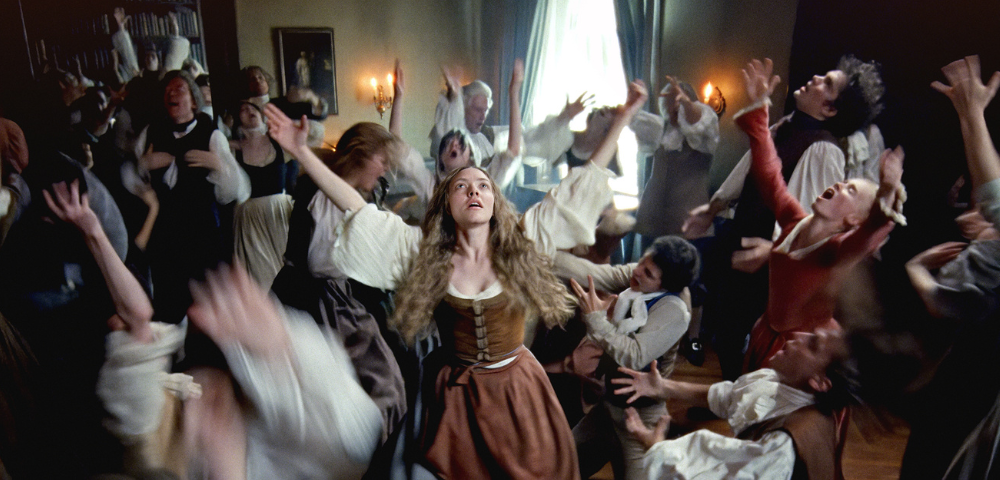
Image: Source: Searchlight Pictures via Europa! Europa Film Festival
Despite the atypicality of its presentation and the real woman at its centre, I was somewhat surprised to find that The Testament of Ann Lee is a surprisingly straightforward historical biopic from a narrative standpoint.
Granted, it deals in much more interesting subject matter than your average puff-piece on a popular musical – Mona Fastvold’s film has several fascinating musings on religion, femininity and sexuality throughout its runtime. Yet something nonetheless feels a bit lost in its narrative framework, which is surprisingly standard considering its focus on a woman who truly went her own way.
Although there are other characters in the film, The Testament of Ann Lee is ultimately about its title character, the founder of the Christian religious movement known as the Shakers. Played by the incomparable Amanda Seyfried, it follows the entirety of Lee’s life – from the origin of her radical ideas, like a non-binary God, in England to their eventual flourishing in the newly founded colony of America.
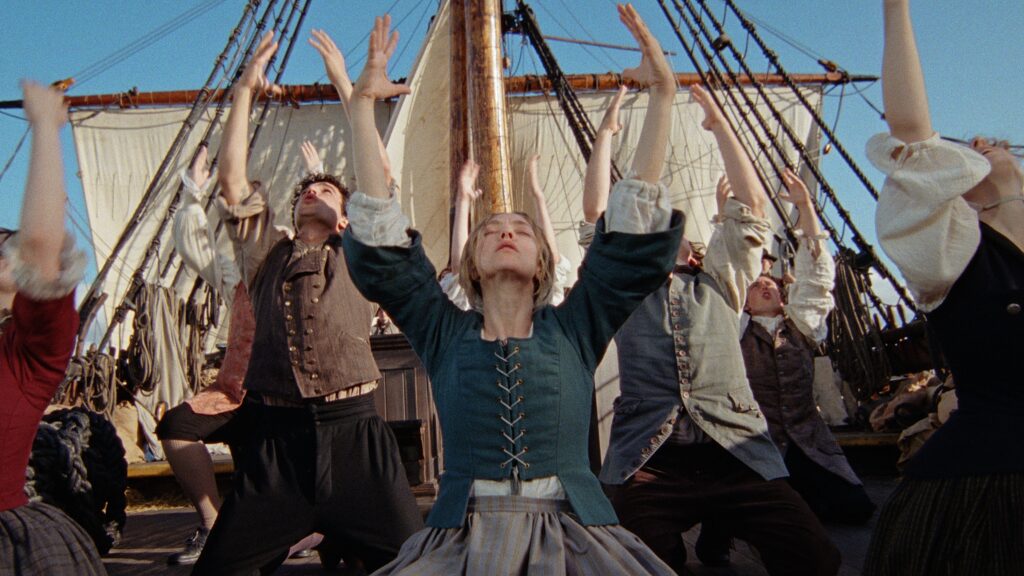
Amanda Seyfried is the foundation of The Testament of Ann Lee
Despite being host to a suite of remarkably talented actors – Thomasin McKenzie, Lewis Pullman and Christopher Abbott to name a few of them doing great work – Fastvold’s film is ultimately a vehicle to deliver a potentially career-best performance from Amanda Seyfried. The Testament of Ann Lee is part-historical drama and part-musical, utilising the original music of the Shakers to convey the story, and Seyfried is the anchor that makes it all work.
With seemingly effortless command over the craft of performance, Seyfried’s rendition is both staggeringly human and appropriately distant. Though there are times where we feel close to her across the film, it’s more common to feel like one of her followers as she leads moments of religious ecstasy or navigates the troubles of 1700s New England. Paired with some wonderful singing, Seyfried truly elevates the material here.
That’s not to say the material is bad – far from it, in fact. Director Mona Fastvold and her co-writer/husband Brady Corbet last collaborated on 2024’s The Brutalist, another film about a somewhat larger-than-life figure trying to encapsulate belief in practice. It’s not impossible to draw parallels between them, but The Brutalist had an advantage that Ann Lee simply does not; though it owes much to history, it is not strictly historical.
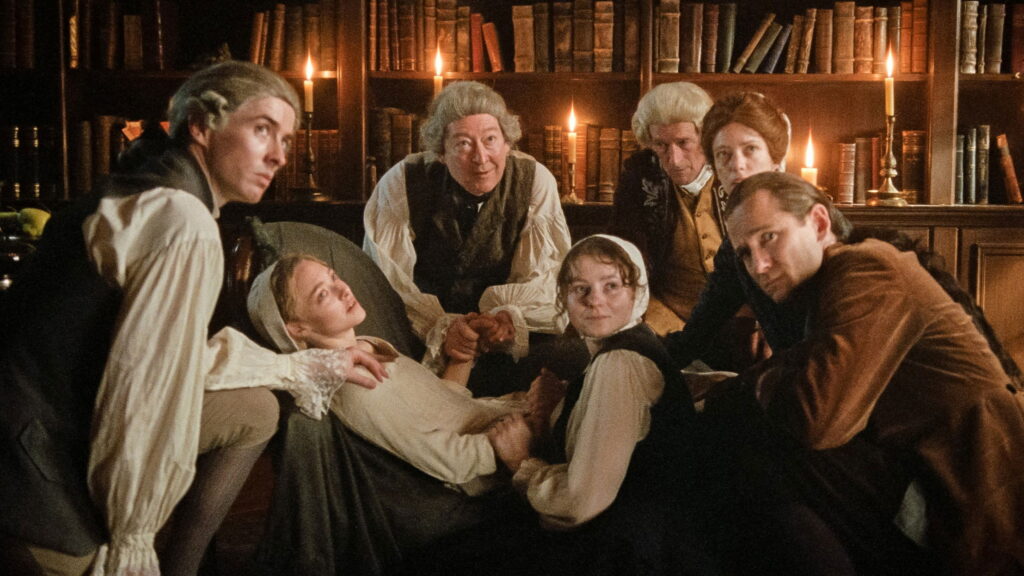
Beautifully made, yet oddly conventional
Perhaps because The Testament of Ann Lee adapts the story of a real woman, it must ultimately feel more standard in its presentation; nonetheless, it made it harder for me to connect with Ann’s story when I could see the skeleton dictating it. The film is divided into three acts with gorgeously rendered title cards, but I felt that focusing on just one of these time periods may have resulted in a tighter, less traditional biopic overall.
I felt this way especially because there are moments of truly remarkable craft throughout The Testament of Ann Lee, where composer Daniel Blumberg’s music and William Rexer’s cinematography combine to make even the most atheistic viewer feel the Holy Spirit in some regard. Yet these moments do often feel few and far between, and the movie is regularly at its least interesting when it’s simply choosing to be a normal biopic with admittedly beautiful cinematography.
Alas, The Testament of Ann Lee is still one that’s well worth witnessing, especially on the big screen. It might drag a little at times and feel stuck between musical and drama at others, but it’s also difficult to deny that its most effective moments are truly electrifying – in large part thanks to Seyfried. Whether you’re faithful, faithless or somewhere in between, Fastvold’s film leaves much to chew on once the theatre lights come on.
★★★½
The Testament of Ann Lee is in cinemas now.