

Planning Without Evidence: The Rezoning Of Woollahra & Erosion of Civic Wellbeing
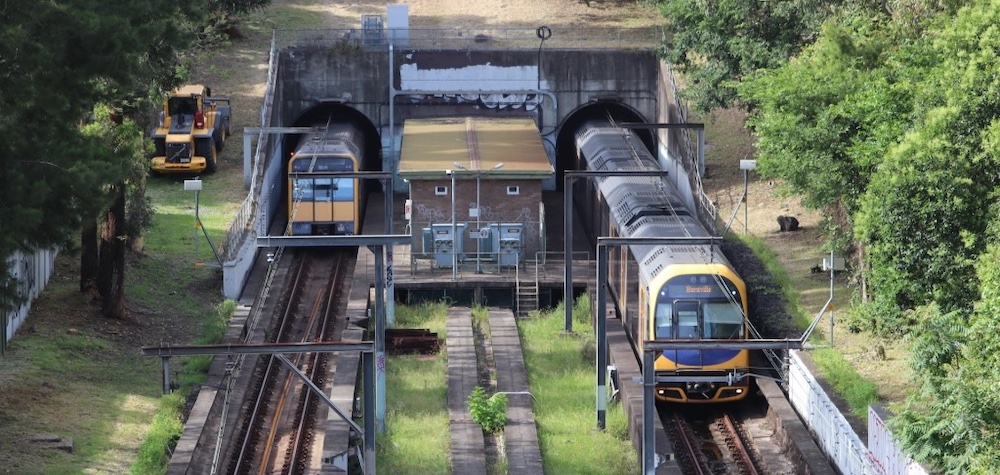
Image: chrisminns/instagram
The NSW Government’s proposal to open Woollahra Station and rezone the precinct for an eye-watering 9,400 new dwellings is being sold as a bold answer to Sydney’s housing pressures.
It is nothing of the sort. It is a rupture masquerading as renewal, a policy intervention that threatens to dismantle an established community under the convenient banner of “unlocking housing supply”. In truth, it is a case study in how evidence-based planning can be displaced by target-driven ambition.
The transport justification is flimsy. The rail distance between Edgecliff and Bondi Junction is roughly 1.9 kilometres. Both stations already offer high-frequency access to the CBD. Residents are not stranded between stations, nor do they face unreasonable walking distances. The idea that Woollahra Station is needed to “activate” the precinct is a policy invention rather than a transport reality.
What is being proposed is not a modest adjustment to planning controls. It is a transformation of an entire suburb. Woollahra Council’s evidence-based analysis identifies capacity for up to 3,600 dwellings once heritage, topography, open space and infrastructure constraints are properly accounted for.
The State proposal exceeds this by a factor of a little over 2.5. No established suburb in Sydney has ever been asked to absorb this scale of change.
The consequences are not merely physical. They are psychological, social and civic. Solastalgia is the term for when people feel distressed when their home environment undergoes rapid, unwelcome change. It describes the grief that arises when the place that anchors one’s identity begins to disappear.
Woollahra is precisely the kind of community where solastalgia takes root. This is not because residents resist change, but because they value the stability, coherence and human-scaled environment that define their daily lives.
Tree canopy loss, overshadowing, noise, traffic pressure and the erosion of familiar streetscapes are not abstract planning impacts. They are lived experiences that shape wellbeing. They affect how people feel when they walk out their front door, how they relate to their neighbours, and how they understand their place in the city. A community’s psychological health is not incidental to planning, but is central to it.
The existence of a partially built “ghost station” is being used as a lever for extreme density. But sunk-cost logic is not a planning principle. The station was never opened because the community successfully argued, decades ago, that it was not needed. That remains true today. Completing it now simply because a half-built station exists is not strategic planning. It is opportunistic development and a misuse of the phrase build it, and they will come.
Sydney needs more housing. But it also needs civic responsibility. It needs governments willing to distinguish between appropriate uplift and reckless overreach. It needs planning that respects the character and constraints of established suburbs rather than treating them as blank canvases for ambitious targets.
Continued reliance on Edgecliff and Bondi Junction stations, with additional development along Edgecliff Road, Ocean St and other pockets within Woollahra can increase density. It provides a more balanced approach, with moderate uplift and planning that strengthens, rather than destabilises, the community’s sense of place.
Cities thrive when they grow with care. They fracture when they grow without it.
Woollahra deserves better than a plan that mistakes disruption for progress.
Julie Claridge is a resident of Woollahra.






Leave a Reply