Did NSW Police Lie About Their Oxford St Drug Raids? I Asked The Experts.
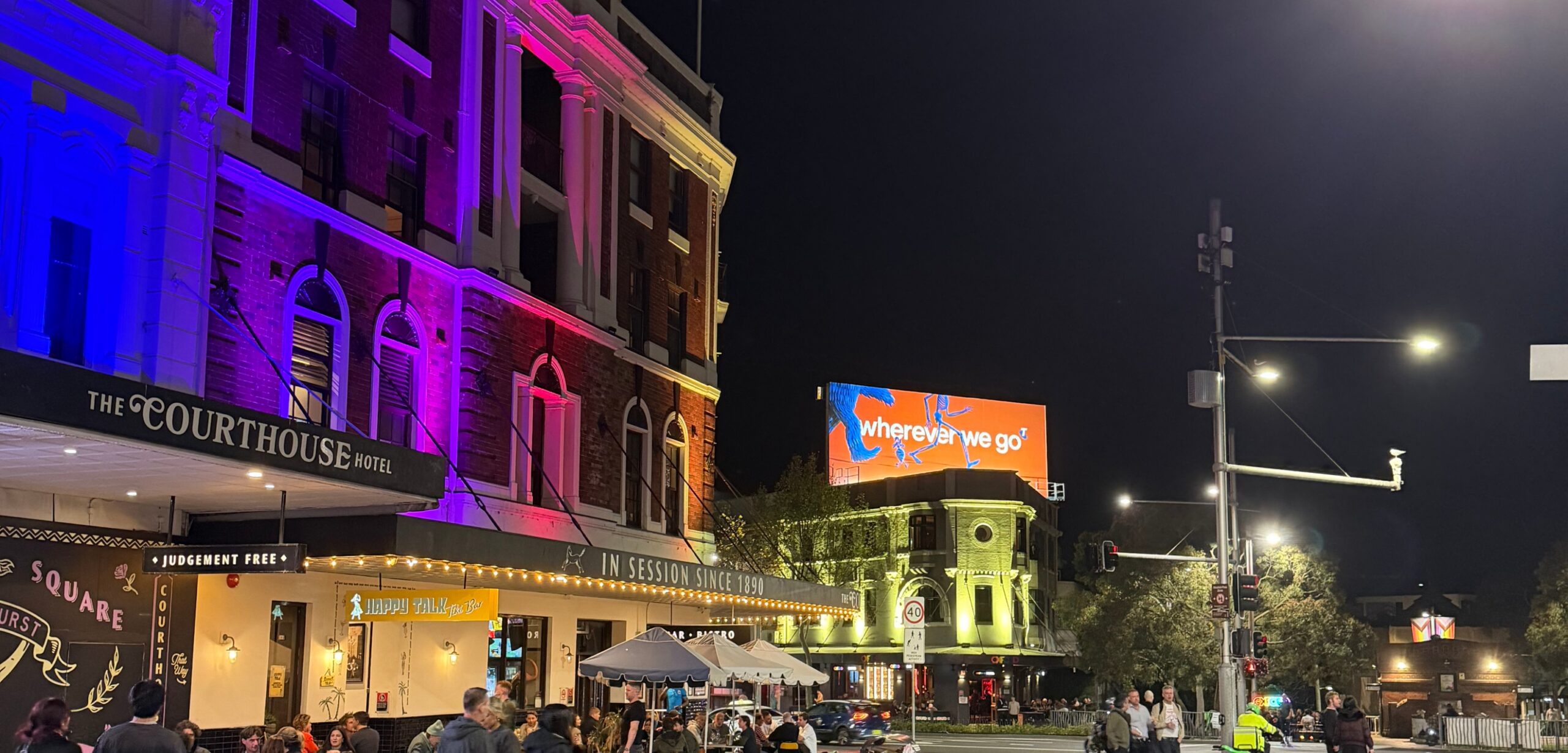
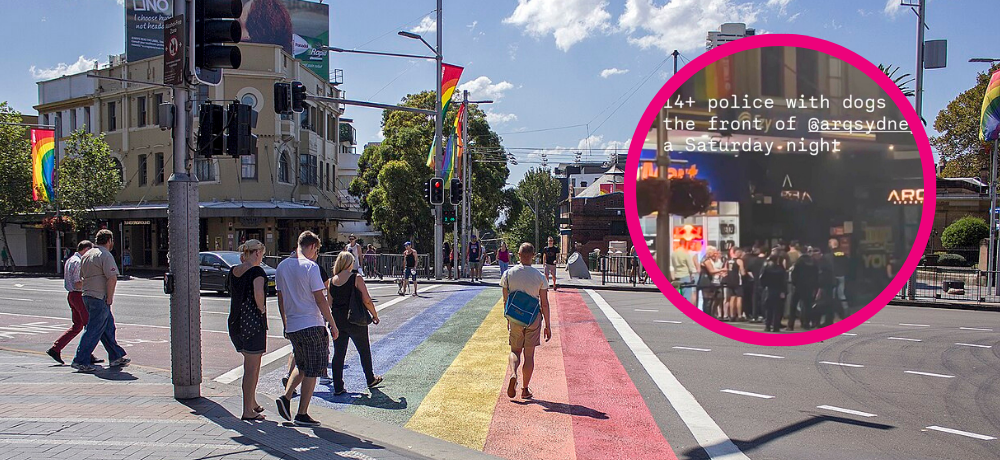
Image: Oxford Street, Supplied
In recent months, the New South Wales Police have copped a lot of heat.
The backlash primarily revolves around two raids on the Oxford Street Entertainment Precinct in 2026, one on Saturday 13 June, and another on Saturday 12 September. In these raids, officers attached to Surry Hills Police Area Command entered several LGBTQ+ venues (Arq, Kinselas, Palms, and The Beresford among them) en masse and conducted drug searches with the assistance of sniffer dogs.
NSW Police Have Defended Both Their Oxford Street Drug Raids
Despite numerous patrons reporting intimidating, aggressive, and unprofessional conduct among officers; widespread accusations that NSW Police are needlessly targeting queer venues; economists warning the raids will result in loss of income and permanent venue closures; and the June raid remaining the subject of an active misconduct investigation by the LECC, NSW Police Deputy Commissioner Peter McKenna defended the raids.
“I think there has been considerable exaggerations and I would say histrionics around this particular matter,” McKenna said in an appearance on 702 ABC Sydney Mornings.
Our managing editor, Chloe Sargeant, pointed out the impressive lack of deference it must’ve taken for McKenna to dismiss the concerns of a minority group historically brutalised by his own department, all under the pretense of hysteria.
As an English major, I too took umbrage at McKenna’s use of the term “histrionics”. For me, a word connoting insincere, dramatic, and ‘over-the-top’ behaviour might better describe another situation: 15+ police officers descending on a peaceful queer venue under the guise of disrupting “drug supply”, yet failing to exact even a single drug supply charge, not to mention declining to share what “intelligence” (or lack thereof) led them to such an astonishing failure.
I contacted NSW Police, and told them we invited some of Australia’s leading academics, researchers, policymakers, legal experts, and harm-reduction organisations to fact-check our “histrionics”. NSW Police declined the opportunity to revise their position, claiming that the comments made by Deputy Commissioner McKenna on ABC radio stand.
NSW Police’s Official Position
Thus it remains the official position of NSW Police that the two operations conducted on Oxford Street were “intelligence-led”, “aimed to proactively disrupt and address drug supply, antisocial behaviour, [and] harm”, and that the department’s focus remains on “reducing violence, crime, and fear, while ensuring Surry Hills continues to be a safe, inclusive, and welcoming environment for all” [emphasis added].
Unfortunately, our experts have struggled to locate even a single kernel of truth in these statements.
Time To Fact-Check NSW Police
Before we begin, I’d like to acknowledge something: public discourse surrounding the police, both in terms of its validity as an institution, and its complex relationship with the LGBTQ+ community, can be a terrifying beast to approach.
It is a debate that not only sits atop decades of trauma and institutional violence, but one that is often used as a divisive vehicle to reinforce partisan lines, rendering lefties like myself unreasonable “anarchists”, and right-leaning minds privileged “bootlickers”.
Whether the police should be eradicated, defunded, reformed, or left-alone, is not within the scope of this article.
Instead, my focus today is far narrower: did the NSW Police lie about their recent Oxford Street drug raids? And, the truth of their official claims aside, were these operations safe, empirically supported, and in the public interest?
If you’ve ever wondered if NSW Police operate in the interest of public health and safety, if police operations are evidence-based, or if local law enforcement care about LGBTQ+ wellbeing, this might be the read for you.
Was The Operation Intelligence-Led & Aimed At Targeting Drug Supply?
Claim 1: The Oxford Street drug raids were intelligence-led and designed to disrupt drug supply networks.
Verdict 1: No intelligence in sight.
While the NSW Police remain adamant that their 12 September drug raid was, like its predecessor, intelligence-led and designed to target drug supply, our experts have struggled to corroborate this claim.
“Searching patrons and issuing fines for low-level possession is more consistent with policing personal use of small quantities of prohibited drugs than disrupting drug supply Networks,” said a spokesperson for Redfern Legal Centre.
“There is no evidence that these raids were targeted at, or did, disrupt any drug supply network or prevent violence.”
Timothy Roberts, President of NSWCCL, concurred with this assessment, calling it “performative policing”.
“There is nothing targeted or intelligence-led about marching officers and sniffer dogs into fourteen different commercial venues in Sydney’s LGBTIQA+ cultural hub,” said Roberts.
“Targeting individual patrons inside venues does nothing to stop drug-supply. Instead, it serves only to criminalise, intimidate, and alienate a community that has historically borne the brunt of over-policing. Statistically, these operations result almost entirely in low-level personal possession detections, rather than of high-level distributors.”
Alex Greenwich, Member for Sydney, also problematised the idea that there was any “intelligence” behind the operation.
“[NSW Police] have said that it was an intelligence-led operation, but when you’re wanting to do operations to crack down on drug supply, these are often undercover investigations, and they often result in arrests and seizing of quantities.
“This was, on Saturday night, 18 police and dogs going into a venue for an hour, resulting in no arrests whatsoever, leaving people intimidated and police conducting what I consider to be inappropriate searches of people in public spaces.”
In light of these testimonies, Star Observer invites NSW Police to share exactly what intelligence led them to Oxford Street.
Was The Operation Aimed At Addressing Violence & Antisocial Behaviour?
Claim 2: The Oxford Street drug raids aimed to address anti-social behaviour and reduce violence.
Verdict 2: Unlikely; there’s nothing “violent” about a twink in a k-hole.
While the NSW Police have stated the operations were undertaken to address violent and anti-social behaviour, no such charges were laid. Moreover, experts suggest if violence was indeed on NSW Police’s radar, Oxford Street’s queer venues would never have made the list.
Dr Kane Race, Professor of Gender and Cultural Studies at the University of Sydney and an internationally recognised critical drug scholar, argued that NSW Police had no reason to suspect they would find any violence at the queer venues they intercepted.
“The idea that these raids were conducted to curb violence seems spurious to me,” Dr Race told the Star Observer. “What evidence do the police have that violence was occurring in any of these venues?”
Dr Adrian Farrugia, Head of the Drugs, Gender and Sexuality Program at the Australian Research Centre in Sex, Health and Society, La Trobe University, had similar concerns, suggesting that the LGBTQ+ community are statistically far less likely to perpetrate violence.
“Many efforts to address and reduce violence in the night-time economy act on all participants as if they are all equally responsible for this violence,” Dr Farrugia told the Star Observer.
“However, as a result people who are overwhelmingly less responsible for this violence, such as women and LGBTQ+ people, are asked to limit their own enjoyment in order to reduce the harms caused by, quite often, heterosexual men drinking alcohol.”
If Sydney’s LGBTQ+ community are famously “lovers, not fighters”, as Alex Greenwich told this masthead, the question remains why NSW Police thought it appropriate to defend their raid of peaceful venues using anti-violence rhetoric, especially when many report their presence was the only thing that felt “unsafe” about Oxford Street that night.
Did The Operation Minimise Harm & Prioritise Public Safety?
Claim 3: The Oxford Street drug raids aimed to address harm, reduce fear, and ensure public safety.
Verdict 3: They may have done the opposite, actually.
Among NSW Police’s media spins was the suggestion that their raids were intended to address harm and ensure public safety. However, our host of experts have contended that if safety was something NSW Police cared about at all, it may have crossed their minds to consult the slew of decades-old research condemning sniffer dog raids as inherently unsafe.
Speaking to Star Observer, Dr Mary Harrod, CEO of NUAA, outlined some of the dangers NSW Police imposed on LGBTQ+ venue patrons during their recent raids.
“High intensity policing operations that employ sniffer dogs and searches are known to increase the risks,” said Dr Harrod. “The 2019 Coronial Inquest into six deaths at music festivals found that fear of police detection led some of those young people to swallow everything they were carrying at once, or to take drugs before entering so they would not be caught.
“The same scenario would apply inside a nightclub – people who are carrying drugs swallow them, hide them, or leave the venue and take them alone.”
The aforementioned 2019 Coronial Inquest gathered evidence from over 50 medical and public health experts. And among its recommendations to ensure such tragic loss of life would never happen again? The complete cessation of drug dog policing.
Unfortunately, that inquest was not the first time (and likely won’t be the last time) experts have fruitlessly informed NSW Police of the harm their raids pose to the public.
In a 2014 paper by Dr Race — one the NSW Police have had over a decade to read — the dangerous link between sniffer dogs and “preloading” was explicated. Dr Race also observed the practice of patrons substituting MDMA for GHB, believing dogs cannot detect it. Concerningly, GHB is the drug most often associated with critical incidents, ambulance calls, and overdoses at these events.
Otherwise, Dr Bianca Fileborn, Associate Professor in Criminology at University of Melbourne, told the Star Observer that drug raids not only impose their own risks, but may dissuade victims of sexual assault and other violence to seek help from law enforcement.
“When police are seen as there only to look for drugs, there can be a perception from victim-survivors that police won’t care about their experiences – that is, this style of policing can create barriers to reporting and accessing support.
“This is compounded for victim-survivors who have used criminalised substances, as there is a concern that they will be arrested rather than supported if they approach police.
“There is already strong evidence that LGBTQ+ communities have low levels of trust in police, and the targeting of queer venues in an area like Oxford street is likely to reinforce this, especially given the history of police violence and targeted raids in queer venues.”
Michael Woodhouse, CEO of ACON, made a similar observation, arguing that “policing that makes people fearful, risks pushing them away from effective harm reduction services”.
Dr Kate Seear, Professor of Law and an Australian Research Council Industry Fellow at the Deakin Law School, told Star Observer that in cases like these, laws criminalising drugs (and the manner in which these laws are enforced) can do more harm than the drugs themselves.
“In debates about drug use, harm and public safety, it’s important to bear in mind that harm and safety come in many forms. Harms can be generated by policing strategies and practices, as well as drug law itself.
“Experts around the world increasingly agree with people who use drugs, many of whom have led these debates, that prohibitionist approaches have been a massive policy failure.”
Ultimately, the consensus among our experts was clear.
“Harm reduction education, the distribution of naloxone, and peers on site through programs like the ACON Rovers and DanceWize NSW are the best way to address harms that may pop up on a night out,” Dr Paul Kelaita, postdoctoral fellow in the Drug Policy Modelling Program at UNSW’s Social Policy Research Centre, told this masthead.
Additionally, our experts pointed to the decriminalisation of illicit drug possession, widespread pill testing, and a permanent end to sniffer dog drug raids as among the most promising harm-reduction strategies.
As for that last suggestion — the one Dr Race pointed out in 2014, that Deputy State Coroner Harriet Grahame reaffirmed at the 2019 inquest, and the one that was yet again called for by a NSW Drug Summit report in 2024 — only one question remains:
Why do NSW Police continue to ignore it?
To my dismay, I’ve come up with only two plausible reasons an organisation purportedly committed to public safety might ignore decades of evidence proving their conduct is antithetical to this purpose.
The first is that they are completely stupid.
The second is that community safety is not among their top priorities at all.
I’m not sure which disheartens me more.
If NSW Police Weren’t Policing Violence Or Drug-Supply, What Were The Raids For?
Given how little NSW Police’s media-facing justifications stand up to expert scrutiny, not to mention their refusal to properly address our “histrionics”, Sydney’s LGBTQ+ community have been left to wonder why our Oxford Street’s venues were even raided to begin with.
For some, the concern is that NSW Police are deliberately targeting illicit drug possession in queer venues because it makes for an “easy win”. After all, it’s much simpler to fine someone carrying a substance with a clear criminal designation than it is to produce a criminal charge from a murky and potentially violent alcohol-induced altercation.
Taken too far, this logic can render policing real crime, real violence, and real threats to the public a far less appetising prospect than finding a Darlinghurst twink with some ketamine on hand.
Indeed, according to Roberts, such prioritisation of “measurable outcomes” may lead to the over-policing of queer venues.
“BOCSAR data isolates alcohol as the primary driver of public non-domestic assaults and severe violence in our nightlife precincts,” Roberts said. “Yet, mainstream heterosexual venues and crowded beer gardens are never subjected to pre-emptive sweeps where police dogs file through bathrooms and force patrons into public strip-searches.”
For Alex Greenwich, working out if queer venues are being unjustly targeted demands that we first answer one question: what are NSW Police’s KPIs?
“I think the piece of work that we really need to do is understanding what are the KPIs and stats and data that is driving this police behaviour,” Greenwich told this masthead. “The concern I have is that there seems to be a particular focus on Oxford Street and Surry Hills. And because the police have had what they consider to be a success, they just keep on coming.”
Others are not so optimistic, instead believing that NSW Police’s targeting of LGBTQ+ venues is not a quota issue, but may be malicious.
“The absence of any arrests for drug supply in connection with these raids raises questions about the true motives for targeting the venues in question,” said Dr Race. “It seems much more likely to me that this is a case of show policing that is more about trying to construct queer communities and nightspots, very questionably, as “immoral”.
So Our Police Are F*cked, What Now?
Thankfully, unlike this article I just spent fourteen hours writing, our next steps are rather simple.
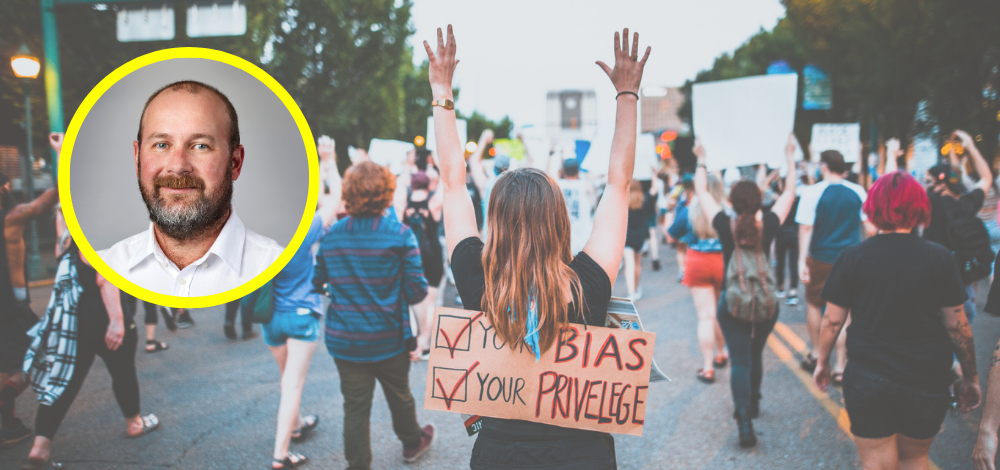
If you’ve found yourself deeply mistrustful of NSW Police’s “intelligence”, no need to scream into the void. Scream at each other. There is a rally happening this Sunday, 20 September, 12pm at Taylor Square. The snap protest — endorsed by City of Sydney Mayor Clover Moore, NSW Council for Civil Liberties Council, and NSW Greens — will march down Oxford Street and demand that NSW Police stop raiding queer venues, and frankly, just do better.
Otherwise, if you know someone who still believes all laws are benevolent, and that all drugs and behaviour are criminalised and policed according to the harm they cause, perhaps link them this article. What better way to say “I told you so” than with a 2,500 word treatise written by an overtired and wonderfully histrionic gay journalist.