

House of Rot: A Hauntingly Beautiful, Brilliant Cabaret Of Decay
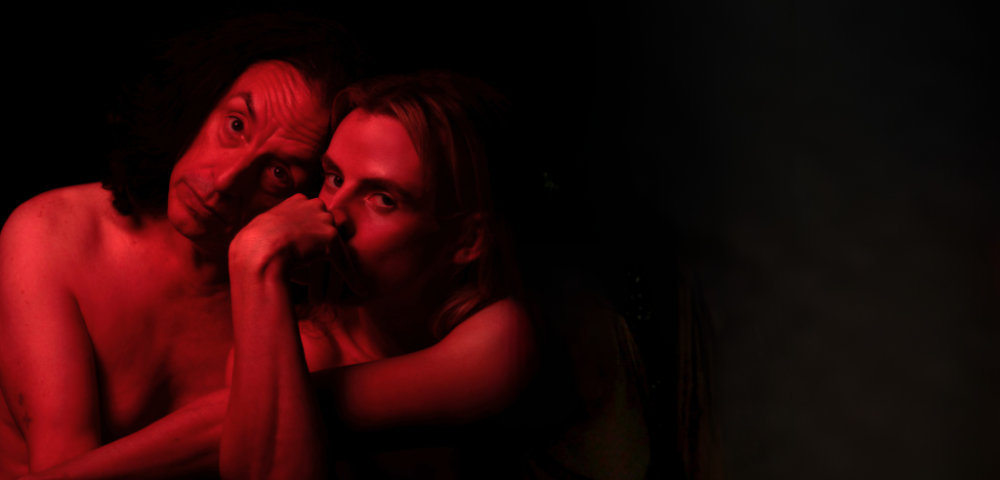
Image: Poster for House of Rot. Source: hayestheatre.com.au
A marvellously melancholic mix of camp and audacious talent, House of Rot is beautifully dishevelled cabaret that thrives on all counts even as it keeps its emotional heart a breadth away.
Directed by Dino Dimitriadis and Victoria Falconer, this world premiere is loosely—emphasis on loosely—inspired by Grey Gardens, borrowing its ghost rather than retelling its story.
For the uninitiated, it’s a cult documentary where former high-society socialites, and cousins to Jackie O Kennedy, lived as recluses in a ever dilapidated 14-room mansion. An instant queer classic as all randomly emerge of course.
Big Edie, played by Paul Capsis and Little Edie, played by Adam Noviello, are everywhere and nowhere: in Little Edie’s costume and unmistakably snatched silhouette, in snippets of dialogue lifted almost verbatim from the documentary, in the ever-present cats and the sense of two people trapped inside a house—and a life—that has begun to rot around them.
House of Rot moves sideways, assembling itself through conversations, songs and strange little moments that somehow linger longer than a conventional story might. Capsis absent-mindedly tears into a cold rotisserie chicken while discussing divorce, fascism and “real boredom”. Two performers wait endlessly for someone who never arrives. The audience are addressed as cats, quietly transformed from spectators into the creatures these characters seem determined to perform for. It’s absurd, dryly funny and just unsettling enough to stop the camp from curdling into parody.
If the Grey Gardens references occasionally leave newcomers reaching for context, they also point towards something more interesting. The ‘mother-daughter’ dynamic gradually gives way to something less literal: an ageing queer performer sizing up the generation behind them, passing on glamour, grief and survival in equal measure.
Noviello moves with haunting precision, pairing crystalline vocals with an aching melancholy, while Capsis is gloriously baroque, forever seeming on the verge of either bursting into laughter or falling apart.
Falconer’s musical direction is fearless, opening with The Windmills of Your Mind before weaving through Crybaby, Touch Myself, Young and Beautiful, Abracadabra and a thrilling Zombie/Send in the Clowns mash-up.
The later shift towards contemporary pop makes the show more immediately accessible, but also sands away some of the eerie unpredictability established early on. By the time Sia’s Alive closes the evening, the ending feels almost too tidy for a work that had previously revelled in beautiful disorder.
Visually, restraint does much of the heavy lifting. Five chairs, a translucent scrim obscuring the band, ghostly projected text, thick haze and lighting that remains almost entirely monochrome until colour slowly bleeds into the stage create images that feel suspended somewhere between memory and dream.
Yet even here, I kept returning to the same feeling: I admired House of Rot more than I connected with it. Every gesture feels exquisitely calibrated, every pause carefully measured.
This is unapologetically queer theatre—not because it excludes outsiders, but because it refuses to translate itself for them.
It assumes its audience understands that performance can be inheritance, that camp can carry grief, and that some icons become immortal simply because they refused to be anyone else.
House of Rot may never fully let you inside its crumbling house, but it’s impossible not to stop and stare through the window.




Leave a Reply