
Two Years Into The Gaza Genocide, ‘The Voice Of Hind Rajab’ Is Essential
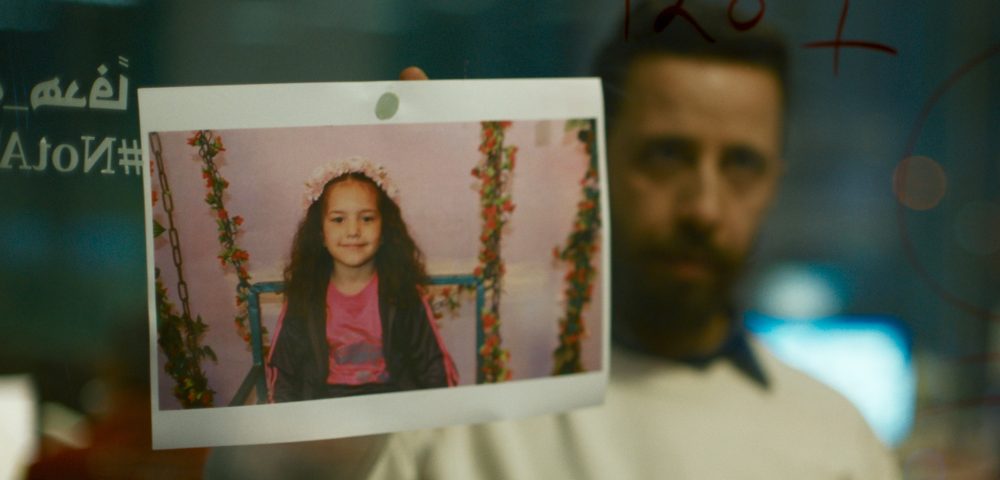
Image: Source: Madman Entertainment
At the time I saw The Voice of Hind Rajab, the official death toll for the Gaza genocide carried out by the state of Israel was nearly 72,000. This is a conservative estimate; this number only encapsulates the dead officially counted by the Gaza Health Ministry, with many still to be pulled from the pile of rubble that was once the Gaza Strip.
Watching the continually rising death count each day for over two years – even amidst a supposed ‘ceasefire’ – fills me with an indescribable mix of rage and sorrow. Atrocity livestream to our phones at such a scale can make it hard to remember that each digit of the count is a human life snuffed out. Death has become a fact of Palestinian life, regardless of age; over 18,000 children have died in this truly unfathomable atrocity.
That sickening number can make it hard to process the individuality of the fallen Palestinians, which is where hearing and remembering the stories of those killed becomes absolutely vital. It’s this exact reason that makes The Voice of Hind Rajab so utterly effective as both a piece of filmmaking and act of remembrance.
The Voice of Hind Rajab is essential viewing
Recreating events that took place at the Palestine Red Crescent Society on January 29th, 2024, The Voice of Hind Rajab is a genuinely essential film. It’s a docudrama that utilises the real recordings from an incident that killed only one of countless innocent children in the Gaza strip to highlight the horror of this genocide through real people who did everything they could to help this girl.
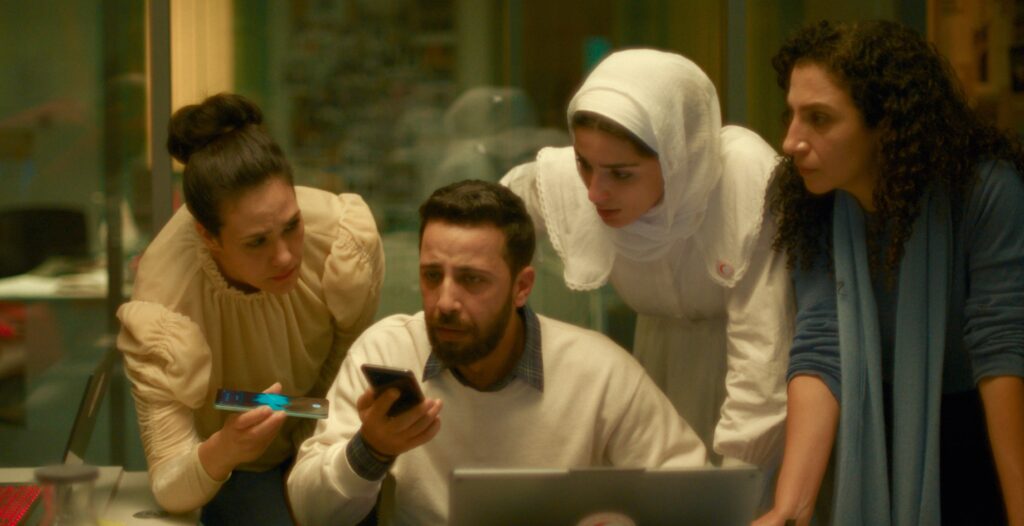
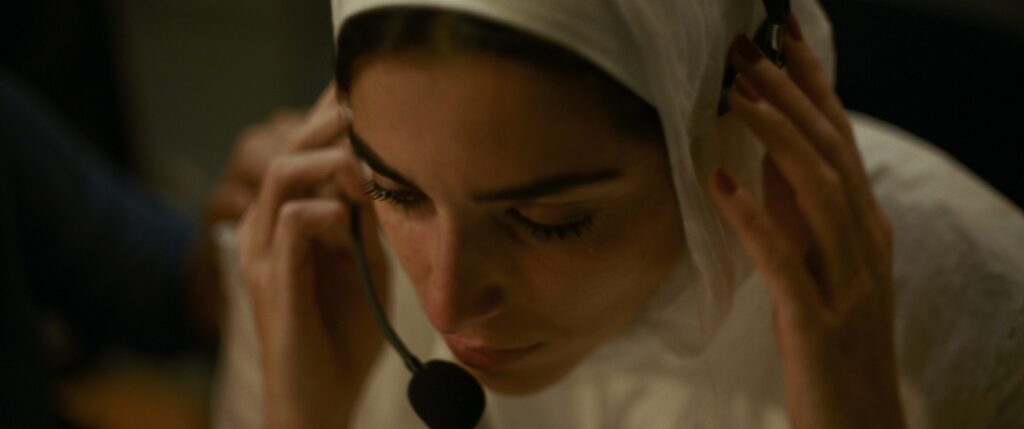
The film – directed by Kaouther Ben Hania – follows real-life members of the PRCS portrayed by actors after they receive a call from Hind Rajab, a young girl sitting in a car full of her family’s corpses after it suffered a rain of Israeli gunfire. The Red Crescent staff mobilise to save Hind, but keep getting caught on the bureaucratic systems designed by the same military state that did this to her in the first place.
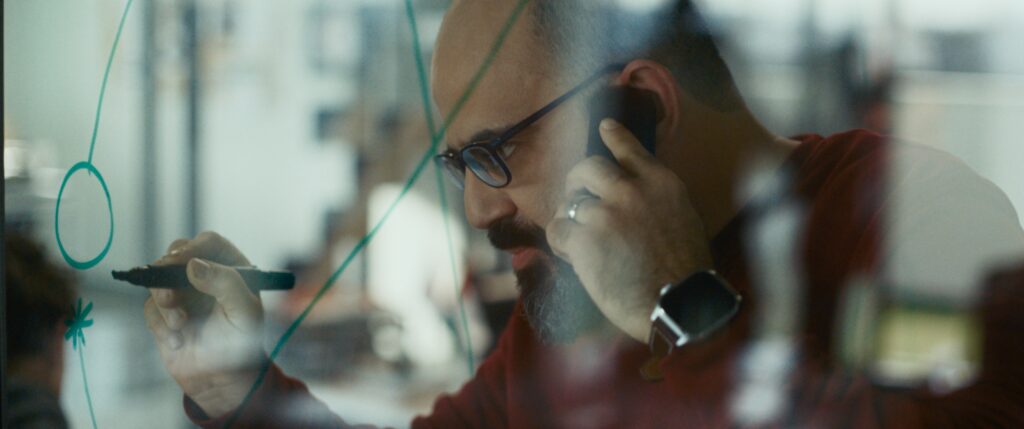
Unlike the despair that comes from checking the news to see a rising death toll, The Voice of Hind Rajab is so profoundly impactful because of how personal it is. There is obviously the fact that Hind’s real voice is used here – a necessary but stomach-churning detail – but the fact that each actor is recreating real phone calls blurs the line between cinematic and documentary storytelling.
Blurring the lines between cinematic and documentary storytelling
Indeed, from the very first moment I heard her voice in the film, I was overcome with a well of emotion. I had heard about the killing of Hind Rajab and the way in which our mainstream media failed to properly portray the IDF’s violence in this and all cases, but I had never personally heard the audio recordings that overlay with the actors’ performances or knew in such detail the agonising last few hours of her life before watching this film.
Such agony is accentuated by the decision to locate the film solely in the PRCS office, with the film’s point of view lying with four main workers in the call centre who try to circumvent the cruel bureaucratic system imposed upon them. Each of these actors is astounding, and Ben Hania’s film also shows a deep understanding of how cinema can effectively convey emotion and necessary stories.
Yet as we are unfortunately far too aware of, the story of Hind Rajab ends like too many others in this ongoing genocide: with detached and unnecessary cruelty at the hands of a military apparatus funded and supported by a majority of Western governments.
We cannot ignore The Voice of Hind Rajab
The Voice of Hind Rajab left a profound impact on me in a way that cinema rarely does. I walked out of the theatre with watery eyes and full of rage, weighed down with an overwhelming sense of guilt that I could simply return to my life. No matter how harrowing, I was not in any real danger watching this film – for the people of Palestine, its events are a daily reality, one that cannot be compartmentalised as a cinematic experience.
Yet through that anger, sadness and guilt I still feel, there’s the faintest glow of something else: hope. Although the Red Crescent workers could not save Hind Rajab, they also never stopped trying even when hope seemed lost. When the young girl felt like her voice might go unheard, they were there to listen.
In that, the film is a call to action: we cannot ignore what the Israeli government is doing in Palestine. Like the Red Crescent workers in the film, this tragedy may seem disconnected from our material realities, but buying into such distance will only enable further atrocities. It may be difficult for us to hear The Voice of Hind Rajab, but we cannot ignore it.
The Voice of Hind Rajab is in cinemas March 5th. Early screenings are available to attend.






Leave a Reply