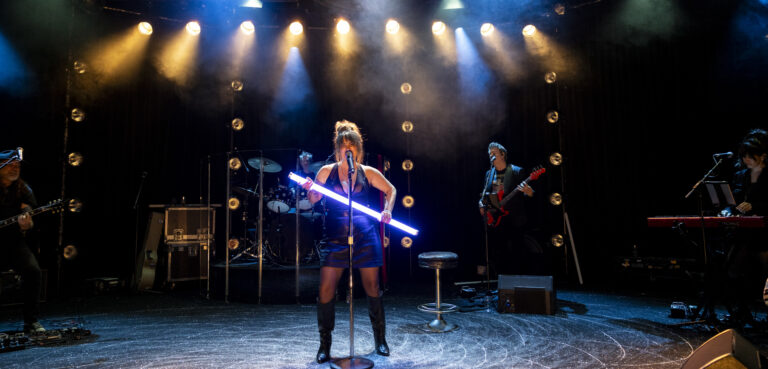
The Politics of Music: Sussan Is A Punk Rocker (Naked City)
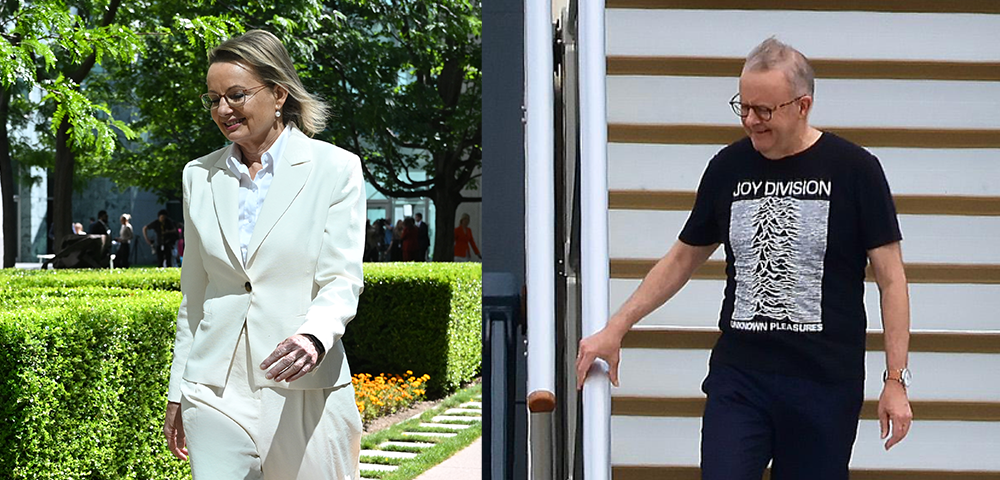
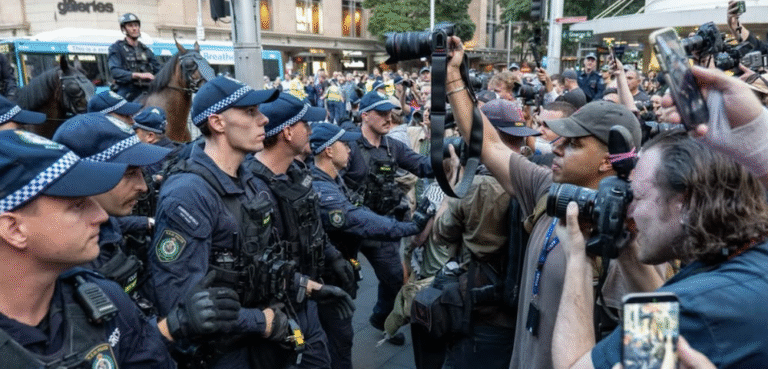
Image: Lukas Coch/AAP & Photo: JDNOPICS/X
When Sussan Ley, resplendent in an all-white pantsuit confronted the media after her party room axing, she signed off with the rather surprising words:
“I was part of the early punk rock movement in Canberra, I will continue to find wisdom in one of punk’s defining themes, a fearless and honest belief in yourself.”
You have to wonder, following her resignation from Parliament, whether she found solace that afternoon listening to the Sex Pistols’ greatest hits, and donning an old dog collar from her high school years.
It should be remembered she previously bagged Anthony Albanese for wearing a Joy Division t-shirt on his return from an American visit, claiming it was antisemitic. Perhaps she finds pure punk acceptable but the post-punk groaning of Ian Curtis not so enlightening.
Most politicians seem reluctant to endorse particular musicians and many musicians seem hesitant when it comes to expressing political beliefs and allegiances. The relationship between pollies and well-known musical artists is an interesting one.
In Trump’s oligarchy, a large chorus of rock musicians have spoken out against his vile totalitarian regime. Perhaps the harshest critic has been Bruce Springsteen, who has described Trump and his cronies as “corrupt, incompetent and treasonous,” and recorded the protest song Streets of Minneapolis.
Not surprisingly Trump has fired back with his usual brand of petty, calling the Boss “overrated” and a “pushy obnoxious jerk”; even describing his skin as “atrophied”.
Meanwhile, he’s had little success in attracting supporters from the broad music community, with the exception of the Village People and an aging Kid Rock.
Despite previously supporting Democratic presidents such as Barack Obama and Bill Clinton, Robert James Ritchie has found a new hero, and maybe a new legion of redneck fans, in his support of the current president.
Many Australian musicians have expressed their political views in song, from Midnight Oil to Paul Kelly and Yothu Yindi. They have been passionate supporters of Indigenous rights and social justice, but not overtly in support of any political party.
Singers such as the ‘Working Class Man’ Jimmy Barnes, who makes no secret of his socialist beliefs, have always been protective of the political hijacking of their songs.
On the other hand, both an online backlash and a temporary ban from Apple Music hasn’t deterred former Neighbours star Holly Valance from a recent collaboration with Pauline Hanson’s One Nation. Valance makes no secret of her support for Donald Trump and Nigel Farage and has become somewhat of a darling of the far right.
An updated version of her 2002 hit Kiss Kiss, Valance released Kiss Kiss (XX) My Arse, which mocks trans people and woke culture. It was released on Australia Day with much enthusiasm from Sky News and other right-wing media.
Perhaps she will be called upon for the next federal election in 2028, when One Nation go all out to win as many seats as possible. Maybe a trance version of Jack O’Hagan’s God Bless Australia:
“Here in this God-given land of ours, Australia
This proud possession, our own piece of earth
That was built by our fathers, who pioneered our heritage,
Here in Australia, the land of our birth.”
Nah, that wouldn’t work: Pauline is a self admitted atheist.
And of course the lefty, snowflake, woke brigade could easily fight back with a version of Joe Dolce’s Shaddap You Face – Pauline.
The idea of poaching a popular song in general however, is not such a bad one. It worked brilliantly for US president Franklin D. Roosevelt in his 1932 presidential campaign, when he hijacked Happy Days Are Here Again.
The song actually became a staple on Australian TV in the late 50s and 60s when children’s TV star Happy Hammond appropriated it as his theme song for The Happy Show.
That was definitely a more innocent era — whether something like this would work as a campaign song in these far more cynical and often troubling times, remains to be seen.