

Sydney Plan Aims To Juggle Housing And Liveability — Councils Are Optimistic
Image: Destination NSW
With the Minns Government’s blueprint for Sydney’s future development aiming to improve liveability whilst providing more homes, councils are hopeful, but concerns about housing affordability and infrastructure remain.
Launched on Thursday by planning minister Paul Scully, the plan forecasts that Sydney’s population will grow by 1.3 million in the next two decades, with 800,000 more homes and 950,000 jobs needed accordingly. Councils will be required to continually plan housing supply for 30 years ahead, with all council areas — including inner urban municipalities such as the City of Sydney — expected to accommodate more residents.
Open space has been identified as a priority. The plan envisions no net loss of open space, and requires significant residential or mixed-use developments to provide public open areas. New housing is to be located within 400 metres of a public open space of at least 3,000 square metres.
The need for more and cheaper housing is clear. Primara, a research firm, found that Sydney’s population would have shrunk by 100,000 in the 2024-25 fiscal year were it not for overseas migration, as Sydneysiders sought cheaper parts of Australia.
Long-term thinking is “welcome”
Lord Mayor Clover Moore said that the City “will take some time to go through the document and reach an informed view, but long-term, strategic thinking is always welcome.”
“The plan’s focus on increasing jobs, open space and encouraging councils to adopt affordable housing schemes like we operate in the City is also welcome.”
“The Government should ensure those schemes incentivise affordable housing that is rent based on household income, and managed by a registered not-for-profit Community Housing Provider in perpetuity, so the housing is genuinely affordable and not lost in 15 years.”
“While it makes sense to zone for additional housing and employment floor space around existing infrastructure, these existing precincts aren’t the only places that will see development. If the Government expects Sydney to grow effectively, it needs a plan for growth in essential services, in particular public transport connections.”
Sarah Dixson is the mayor of Woollahra, a majority-Liberal council that has clashed with the Minns Government over the latter’s development plans, particularly around the unfinished Woollahra station.
“Whilst it is good to see a long-term plan for housing in Sydney, the biggest challenge for the Government will be matching growth with infrastructure funding.”
Woollahra recently unveiled its alternative to state plans for redevelopment around the half-built facility. This would see an overall reduction in the height of development, and the provision of 3,600 new homes instead of 10,000.
Scully has stated a desire to work with councils, to which Dixson responded positively. “We are looking forward to the opportunity of meeting with the planning minister and presenting an alternative approach to the state-led rezoning for Woollahra and Edgecliff, which includes 10,000 new units around the train stations over 10 years.”
“A win for housing diversity”
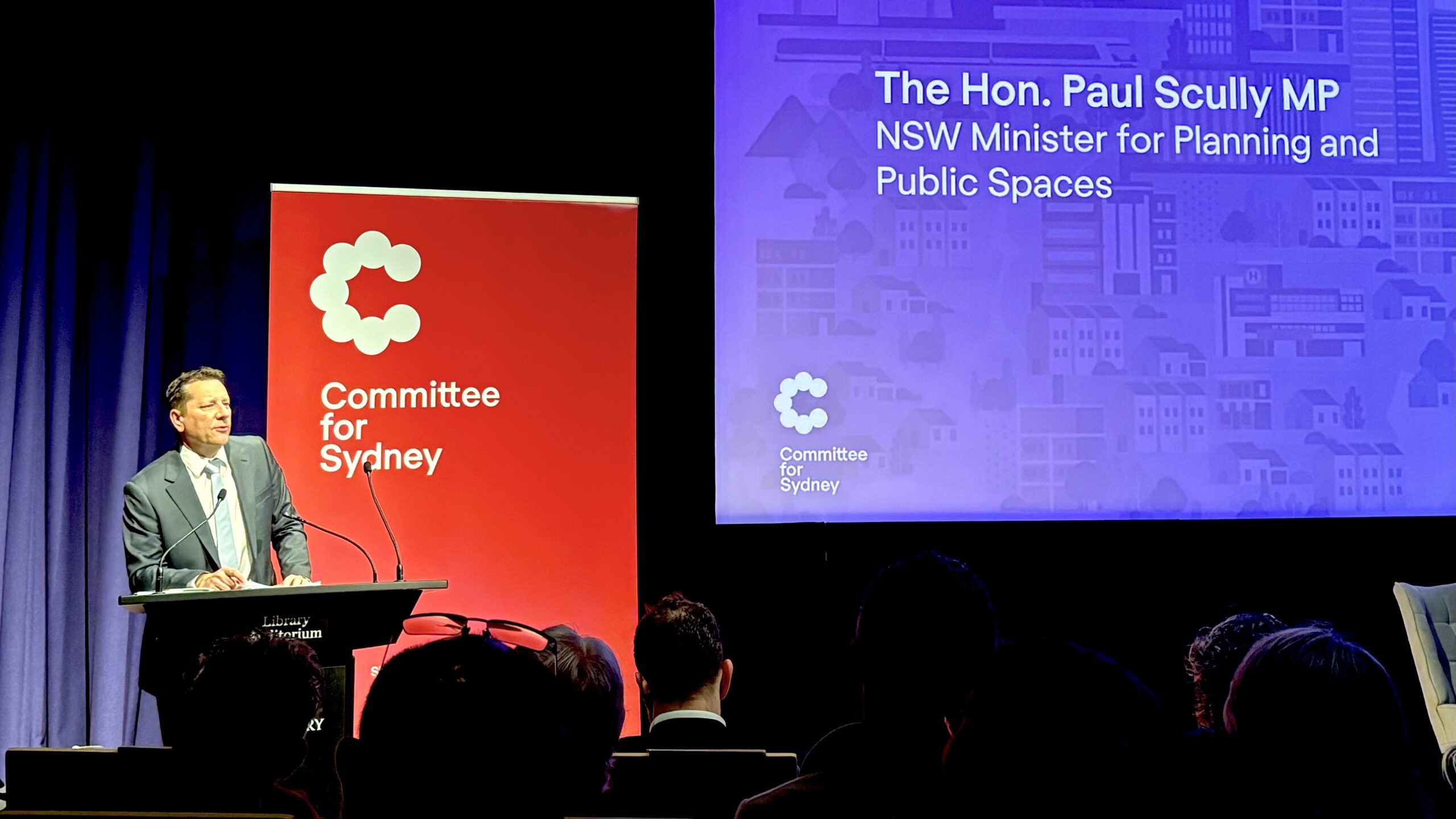
Eamon Waterford is the CEO of the Committee for Sydney, a leading urban think tank that hosted Scully for the recent policy launch.
“This plan tells a story of more jobs in the west, more housing in the east and more of the infrastructure and amenities that make life better for all of us.”
“For the first time, public space targets will be considered as a part of the rezoning process, meaning great outdoor areas will be planned for from the get-go, so that new suburbs, developments and precincts can breathe more easily with better access to nature.”
“This isn’t just a plan with broad housing targets, it’s a win for housing diversity and family-friendly apartments. In a growing city with an increasingly diverse makeup of homeowners and renters, this is so important.”
The planning minister was contacted for comment.



Leave a Reply