
Image: Wikimedia Commons
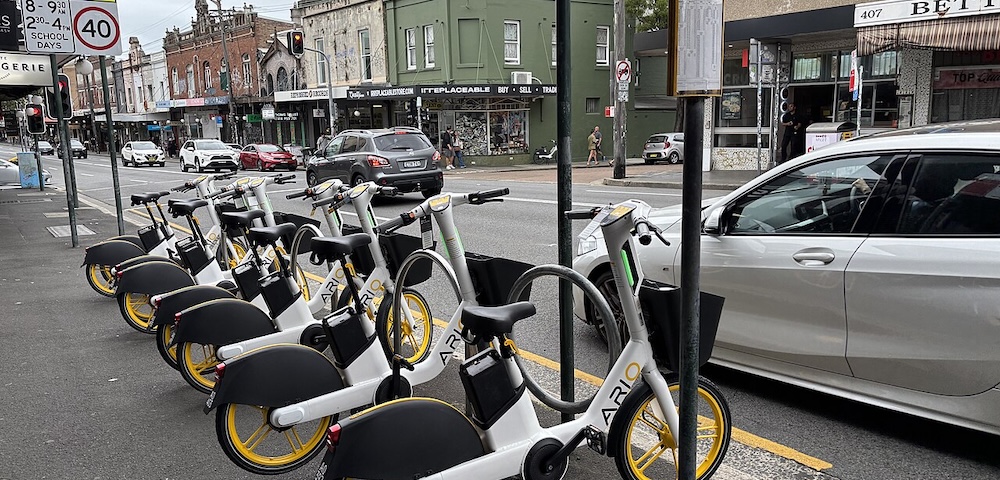
From today, shared e-bike operators in NSW are no longer able to deploy bikes without regulatory approval, following the introduction of new statewide laws governing their use and placement.
New laws regulating shared e-bike schemes have officially come into effect across NSW today, 14 August, introducing an Australian-first approval system for operators and giving councils greater power over where bikes can be parked and how many can be deployed.
Until now, shared e-bike companies have been able to roll out fleets without approval. Under the new system, operators must be approved by Transport for NSW and authorised by individual councils or relevant authorities before providing services.
The changes introduce statewide minimum standards covering insurance, helmets, device safety and identification, as well as requirements for companies to provide data on trips, incidents and complaints.
Operators will also be responsible for ensuring bikes aren’t left blocking footpaths, pedestrian crossings, bus and light rail stops, taxi zones or fire exits.
And there are some fairly hefty consequences for companies that don’t play ball, with penalties reaching $55,000, plus another $5,500 for every day of ongoing non-compliance.
“If you’re sick of e-bikes cluttering up your streets, these are the laws you’ve been waiting for,” Transport Minister John Graham said.
“But likewise, if you’re someone who really enjoys using shared e-bikes these laws will make them safer and more reliable.”
Councils will gradually receive additional powers over the coming months, including the ability to establish dedicated parking bays, “no-go” and “go-slow” zones, and impose fleet caps based on factors including demand and operator performance.
A levy on shared e-bike trips will also fund a $6.6 million grant program, with councils eligible for up to $200,000 to build dedicated e-bike parking infrastructure.
Private e-bikes also facing tougher rules
The reforms aren’t limited to share bikes. The NSW Government is also tightening the rules around privately owned e-bikes, with a suite of changes targeting illegal, modified and potentially unsafe bikes.
The state’s maximum legal power output is being reduced from 500 watts to 250 watts, bringing NSW back into line with the standard used elsewhere in Australia. A new standard will also require legal e-bikes to be pedal-assisted and designed so their legal power output cannot be tampered with.
A minimum age for riding e-bikes will also be introduced, although the government has not yet specified what that age will be.
NSW Police are also being given powers to seize and destroy illegal privately owned e-bikes, part of a broader crackdown on high-powered or illegally modified devices.
Battery safety is another major focus. Tougher safety standards are being imposed on the sale of lithium-ion batteries, following ongoing concerns about fires linked to e-mobility devices.
Converted e-bikes will also be banned from trains and Sydney Metro services specifically to reduce the risk of battery fires on public transport.
The measures are being rolled out in stages, meaning not every change announced by the government takes effect today.
Parliamentary Secretary for Transport Marjorie O’Neill said the changes would take time to become visible on Sydney’s streets.
“This is a massive undertaking which will take some time to fully implement, but over the coming months you’ll start to see the improvements take effect on our streets.”