
‘Rental Family’: A Funny, Tender Portrait Of Loneliness That Hurts So Good
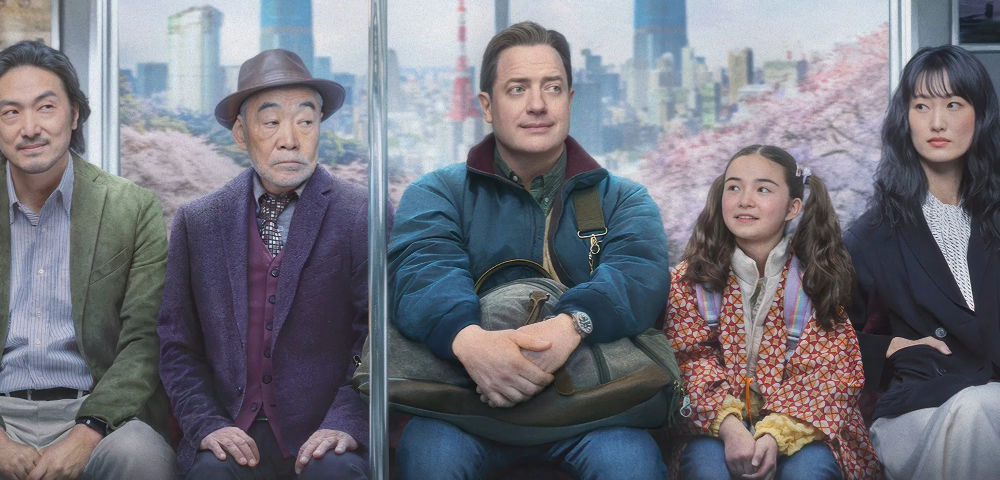
Image: Rental Family dir. by Hikari. Source: TMDB.
A tender, funny gut punch of a dramedy, Hikari’s Rental Family moves between sweetness and sadness with disarming ease. It earns its tears and laughter in the same breath, leaving you a little wrecked by the end—and quietly grateful for it.
Set in Tokyo, Rental Family follows Phillip, a down-on-his-luck American actor played with aching restraint by Brendan Fraser. His career peaked years ago with an over-the-top toothpaste commercial; now he scrapes by on minor gigs as the “token white guy”. After being hired to play a “sad American” at a fake funeral, Phillip is recruited by a rental family agency—offering the appearance of perfection, stability and belonging for a fee.
The premise sounds odd, but it clicks fast. Inspired by Japan’s real ‘rent-a-family’ industry, the film observes more than it explains, sketching a world where pretending often feels easier than confronting loneliness or stigma head on.
A queer woman hires Phillip as a husband to satisfy her family before leaving the country with her real partner. A single mother needs a father figure to help her child get into a school built around traditional family values.
Consistently compelling, each vignette simmers with warmth and unease, funny and f*cked in equal measure.
As performance turns personal, the film finds its tension in blurred boundaries, probing intimacy built on convenience and emotional substitution.
Wasting little, the film is character-driven and easily absorbing with its pacing mirroring Phillip’s drift before tightening as his entanglements deepen.
It’s also frequently and unexpectedly funny, with absurd situations unfolding beautifully against the restraint of Japanese social norms.
Fraser is the emotional backbone. Vulnerable without self-pity, he makes Phillip awkward, subtly magnetic and deeply human—you root for him instinctively.
The supporting cast more than matches him. Takehiro Hira brings a grounded presence as agency owner Shinji, while fellow ‘rental actress’ Mari Yamamoto is especially captivating, her arc among the film’s most affecting. Every role, no matter how limited, feels fully lived-in, creating a rare sense of emotional symmetry across the film.
Visually, Tokyo is treated as a character in its own right, glowing with artificial light and quiet isolation. Phillip’s apartment, framed by lit-up windows of other lives, becomes a recurring image of longing— yet warm from the outside, hollow within.
A delicate piano motif and thoughtful sound design seamlessly stitch the stories together with surprising lightness.
Rental Family occasionally indulges sentiment, states its ideas too plainly and at times it does hold your hand, but the emotion feels earned. Anchored by gripping performances and striking visuals, Hikari’s assured sophomore feature is generous in what it gives, and when it hits, it hits hard.
Without judgement or sermonising, the film reveals how far people will go to feel seen, even briefly.
The film briefly flirts with foreign-saviour territory and found-family tropes, but remains just self-aware enough. Phillip is less a fixer than a placeholder, a temporary presence exposing deeper absences rather than resolving it.
For those who ever pondered an extended, dramatic and beautifully lit version of Nathan Fielder’s The Rehearsal, this is a must watch.
By the time Rental Family comes full circle, it quietly devastates—lingering with a sting and leaving you with a wet face and a full heart.
★★★★
Rental Family is in theatres from 26 December.