
Mixed Views on Potential Glebe Island Housing Development
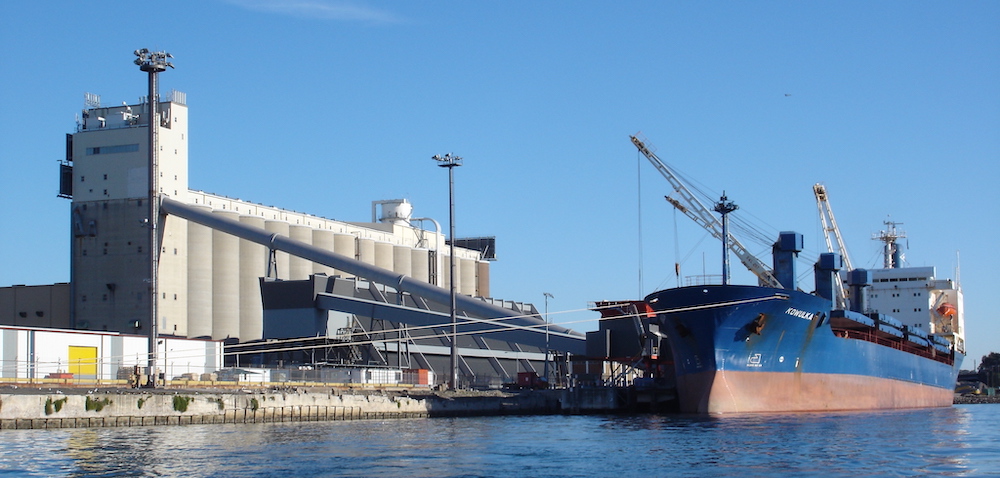
Image: Wikimedia Commons
There’s much division and differing views when it comes to Glebe Island. As industry groups warn against the closure of Sydney Harbour’s last working port, the government considers whether to redevelop the Inner West site.
Glebe Island has been in the Minns Government’s crosshairs following Australian Turf Club members’ rejection of a plan for housing on the site of the Rosehill racecourse. Nearby Wentworth Park is also being looked at.
In July last year, prior to the Rosehill bid’s failure, premier Chris Minns said that the prospect of housing development on Glebe Island was “very attractive for us to explore”, though he stressed that no decision had been made.
“We haven’t made a final call on it, and obviously we have to talk to industry, but I’m not going to turn my back on it,” the premier said.
In June, Ben Fordham of 2GB asked Minns if housing development would require the port to shut. “Not necessarily all of it,” he answered.
“There’s different elements to it; you’ve got sugar that goes in there, you’ve got critical minerals for the construction sector, a working port, and the cruise terminal. So there’s many different aspects to the Glebe Island area.”
Local MP stresses liveability and need for “genuinely affordable” housing
Kobi Shetty is the Greens member for Balmain, representing the leafy peninsula and surrounding suburbs in the Legislative Assembly. Commenting to City Hub, she expressed support for affordable housing around public transport, so long as the quality of life is maintained.
“Increasing density around transport hubs is a great way to plan our cities for the future, and it is something I support. We need to make sure there is still room for all the things that keep our city functioning and that they are creating good places to live,” Shetty said.
“The government is already pushing ahead with significant uplift at the former fish market site and Bays West, so if they want to add more development again, they need to be confident that the infrastructure will be in place to support a growing population. They would need to take a good look at our schools, hospitals, public transport infrastructure, and green space and provide that up front to support the growth.”
An underground railway station is presently under construction nearby, as part of the Sydney Metro West project.
“It’s also critical that the government ensures that any government owned land, like Glebe Island, is used to deliver genuinely affordable housing, including for key workers like our nurses and teachers who are being pushed out of the city. There’s no shortage of luxury waterfront properties – it’s affordable and public housing we need to see more of.”
Glebe Island is “the last stand” of Sydney’s working harbour
Margy Osmond, CEO of the Tourism & Transport Forum, is cautious. The industry group is one of 19 organisations constituting Sydney’s Working Port Coalition, all of which stress the importance of the Glebe Island port. The coalition penned an open letter to the premier late last year.
Osmond told this masthead that the forum’s “support for Glebe Island remains as strong as ever.”
“Over the past forty to fifty years, land around the harbour that supports port operations has steadily disappeared. Glebe Island is the last stand; losing it would be a short-sighted decision with long-term consequences for the city and the state.”
Osmond noted the port’s key role in Sydney’s economy, calling it “a critical part of Sydney’s industrial network and emergency response capability” which could take statewide supply chains with it.
“Right now, Glebe Island handles about 40 percent of Sydney’s cement and all of its gypsum. If we lose it, that freight would need to be trucked in from Port Kembla or Newcastle.”
Osmond believes that the result would be “traffic chaos” along the coast, in addition to “major delays and cost blowouts for housing and infrastructure, all during a nation-wide cost-of-living crisis.”
“There’s also the environmental toll, higher emissions, worsening air quality, and more damage to local roads.”
Port essential for cultural events
Without the Glebe Island port, it would be “pretty well impossible” for Sydney to host many of its most iconic events, Osmond told City Hub. These include large festivities for New Year’s Eve, Vivid, Australia Day, Opera Australia and the Sydney Festival.
“If we lose the port, we lose our biggest tourism drawcards – there’s just nowhere else in Sydney to do it.”
Potential for dual usage
Planning minister Paul Scully recently told the ABC that any potential housing development in the area “would include the retention of a deep-water port in the Bays.”
Despite their concerns, the organisations committed to the working port are not opposed to hybrid solutions, or “creative thinking” as Osmond called it. She noted that similar developments exist “in cities around the world.”
“Sydney’s Working Port Coalition has continued to engage with Government, and we are optimistic that a balanced solution can be found, one that protects the essential role of Glebe Island while allowing for thoughtful urban development.”
“We believe there’s a real opportunity to plan for a future that supports both the city’s growth and the infrastructure that underpins it.”