
Here’s Stanley: Kubrick’s Opus Unspools At Hayden Orpheum
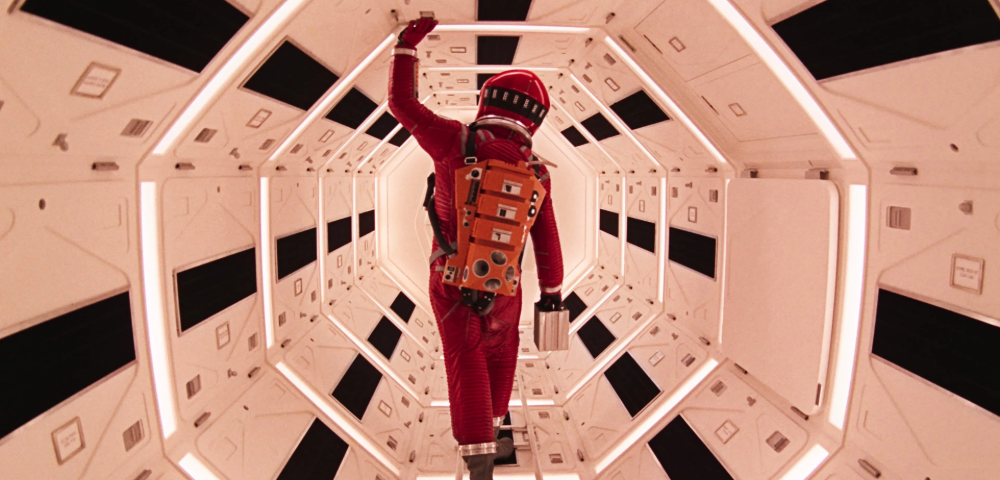
Image: A still from '2001: A Space Odyssey,' dir. by Stanley Kubrick. Source: TMDB.
Meticulous, uncompromising, and rarely content to repeat himself, few directors have bent Hollywood to their will quite like Stanley Kubrick. This autumn, Sydney audiences will have the chance to descend into his vivid world of cinema on the big screen, as intended.
Running from 2 April to May 21, Hayden Orpheum Picture Palace presents Kubrick, opening a door straight into the auteur’s complete filmography.
Curated by the Cremorne cinema, the series will screen all 13 of Kubrick’s features in chronological order, tracing a career from scrappy experiments to some of the most intricately constructed films ever made.
The season moves as a mix of double-features and standalone sessions, perfect whether you’re a hardcore completionist or up for a not-so-quick but casual schooling in film that’ll swallow you whole anyway.
The series opens with a double bill of the early rarities Fear and Desire and Killer’s Kiss, low-budget, jagged works where Kubrick is still honing instincts for framing, tension, and the uneasy stretch of held shot.
It then pairs the lean, ticking-clock crime thriller The Killing with the blunt force of Paths of Glory, where trench warfare and military hierarchy collides with the chill logic of institutional power.
From there comes the more familiar stretch, expanding in scale but never loosening. 2001: A Space Odyssey, still feeling like a film that redefined cinematic space itself; A Clockwork Orange, an unsettling fusion of satire, unabashed violence and style; The Shining, an endlessly quotable picture that’s so embedded in horror it now reads like grammar; Full Metal Jacket fractures war’s spectacle and glory to expose the machinery underneath both.
And closing with Kubrick’s final and endlessly dissected film, Eyes Wide Shut—an uneasy drifting Christmas-lit dream, or nightmare, with Nicole Kidman and Tom Cruise at their finest.
Across just 13 films over 46 years, Stanley Kubrick has seeped into every corner of modern cinema. Not always cleanly, but in the obsession with symmetry, scale and images built with nearly mechanical precision. A name synonymous with control, from endless takes to exacting frames, his mythology sticks for a reason.
But what this retrospective makes clear is how differently that control manifests. A war film doesn’t behave like a sci-fi epic, a comedy about nuclear annihilation, and so on. Yet, somehow, they all feel like they belong to the same stark mind.
For cinephiles eager to get their stare on or the simply curious alike, this is the full experience—Kubrick’s films restored to sequence, scale, and the big screen they were built for.
Kubrick Retrospective is on from 2 April to 21 May. For more information and tickets, visit orpheum.com.au




Leave a Reply