

‘Godzilla Minus Zero’ Embraces Its Contradictions To Entertaining Effect
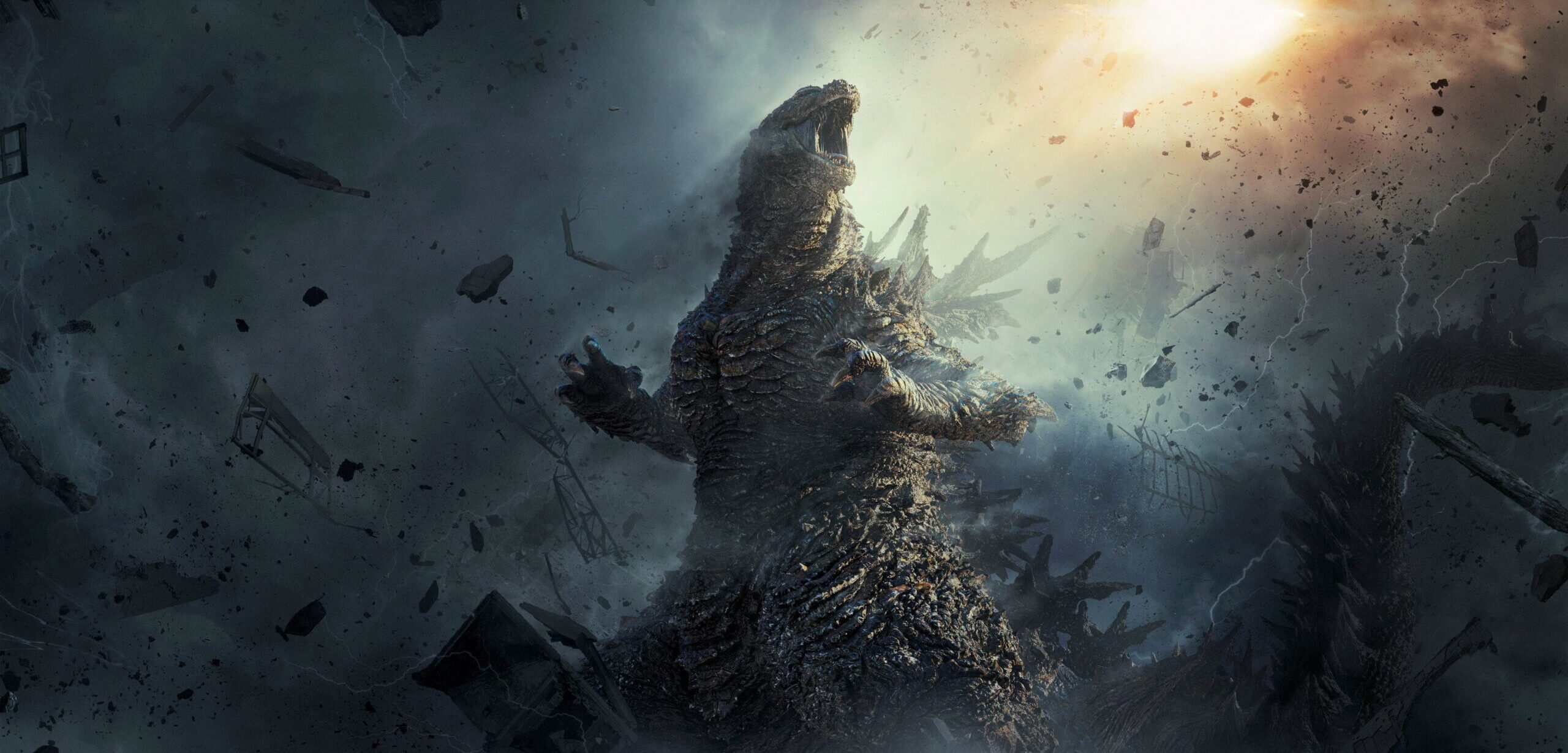
Image: Source: TMDB
As the reigning King of the Monsters for well over 70 years, Godzilla has become something of a hulking contradiction both in and out of the movies it appears in. The notion of an atomically infused mega reptile has been used to represent rather serious topics like nuclear annihilation, the failures of bureaucracy in crisis and the toll of war, while also having become an action icon who we love watching destroy cities and battle with other similarly-sized monsters.
Much like its direct predecessor, Takashi Yamazaki’s Godzilla Minus Zero is not interested at all in resolving the tension between Godzilla as metaphor and awe-inspiring spectacle. Instead, it leans into everything even harder – the metaphors, the spectacle, the kaiju-on-kaiju action – and ends up being a better film than 2023’s Godzilla Minus One (in my opinion, anyway).
Godzilla Minus Zero opens two years after the utter devastation of Ginza, Tokyo by the titular monster as a new malevolent reptilian makes his appearance – the extraterrestrial Ghidorah. Ex-kamikaze pilot and Minus One protagonist Koichi Shikishima (Ryunosuke Kamiki) is drawn into the fray once more out of obligation, even as the kaiju evolves and Godzilla makes its return.
However, humanity uncovers a new way to potentially harness the power of the King of the Monsters, thanks to the unexpected fallout of his previous rampage and the invention of one Dr Murakami (Min Tanaka). But like any man stumbling upon unfathomable atomic power, has he considered what impact that might have on the rest of the world?
Godzilla Minus Zero is more interesting than its predecessor
Compared to Godzilla Minus One – which I personally find a little too clinical for its own good – there’s a much more existential kind of dread to the monster madness in Minus Zero. The characters genuinely struggle with being caught between entities of unfathomable power, and the collective cost of calamity is displayed much better here than in its predecessor.
Although the highly melodramatic narrative and performance style employed by Yamazaki still isn’t my favourite, it also makes Godzilla Minus Zero a more thematically compelling film to me. Most interesting is the character of Murakami, a Hiroshima survivor who has devised the means to call the King of the Monsters anywhere through some delightfully silly science mumbo-jumbo.
Murakami’s survival in Hiroshima (depicted in thoroughly gauche detail, I must admit) is the impetus for his rage against the occupying Americans, and part of his plan to use the King of the Monsters to get revenge. It’s one of Minus Zero’s more interesting narrative threads, particularly as we watch the inevitable beatdown between Godzilla and King Ghidorah that pretty directly asks: should humans have access to this kind of power?
Meanwhile, returning characters like Koichi, his now-wife Noriko (Minami Hamabe) and fan-favourite Professor Noda (again portrayed by a wonderful Hidetaka Yoshioka) continue their seemingly hopeless effort to fight against these giant creatures, which themselves here feel quite representative of the historical sins committed by and inflicted upon Japan during World War 2.
Where the previous film’s message felt rather blunt, Godzilla Minus Zero creates a bit more room for nuance even as it veers into old-school kaiju beatdown mode. I would venture to say that it’s actually a distinctly more anti-war film than its predecessor, given how much more specific it is in its criticisms and in spite of it making us root for Godzilla.
As such, I’m pleasantly surprised to say that I actually enjoyed Godzilla Minus Zero a lot more than its predecessor. By embracing its contradictions even more, it somehow barrels through the problems I have with it to be a more successful outing overall than Minus One.
★★★★
Godzilla Minus Zero is playing in cinemas now.









Leave a Reply