
Australia Looks To Set Minimum Wage For Food Delivery Drivers
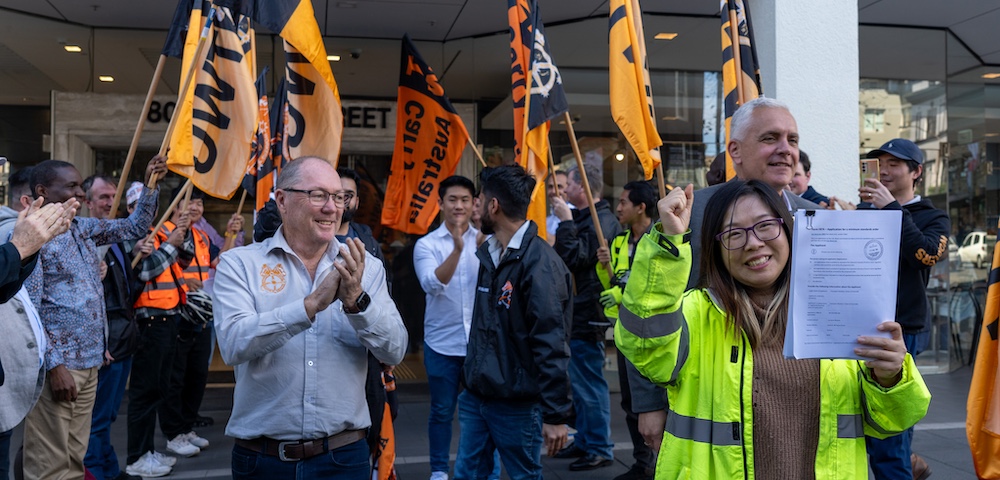
Image: Transport Workers Union-TWU/Facebook
Australia may become the first country in the world to establish a legally enforceable hourly wage for food delivery drivers, as well as better protections in the event of job-related injuries and accidents, pending approval by the Fair Work Commission (FWC).
Uber Eats and DoorDash have collaborated with the Transport Workers’ Union on a joint application to the FWC, under new Albanese government laws that let the commission set minimum standards for “employee-like” workers.
Currently, many delivery drivers are only paid for completed jobs and do not receive compensation for the time they spend waiting between orders or waiting for restaurants to finish preparing food.
$31.30 an hour, but with limits
Under the proposal’s standards, a minimum rate per hour spent working on the app would be set at least $31.30 an hour from 1 July 2026 and is scheduled to increase slightly from New Year’s Day in 2027. The rate will vary depending on the mode of transportation.
Additionally, drivers will still have to pay for their own third-party insurance on their modes of delivery, meaning if they hit and damage someone else’s vehicle, that cost is on their shoulders. However, Uber Eats and DoorDash would have to pay for separate personal accident insurance that covers their riders themselves in the event of an injury while they are working.
The Transport Workers’ Union has shared that since 2017, at least 23 workers have been killed on the roads, and warns the actual rate may be higher because not all deaths are disclosed as workplace-related.
Moreover, the proposed deal would provide improved processes for delivery drivers regarding dispute resolution, new opportunities for engagement and feedback, and rights to representation. The deal would treat drivers as employee-like.
“The peace of mind that you are actually getting paid while you’re on the job … can only be a good thing,” said a delivery driver in Melbourne, Eric Ireland, to The Guardian. “Sometimes you can earn a lot more than that if you do what they call a ‘quest’, which is doing 10 jobs in a weekend or something.”
Workplace law experts are already pointing out that this isn’t a traditional minimum wage. There are no penalty rates for nights or weekends, and the $31.30 is viewed as a safety net rather than a guaranteed payment for every working situation. Experts have noted that it’s unlikely for drivers to actually earn $31.30 for every hour they are on the delivery platform, as there can be periods of low demand.
Who’s paying, customers or restaurants?
Neither Uber Eats nor DoorDash has outlined how they plan to fund the increase in labour costs. But experts say the most likely answer is customers. In addition to customers, some of the cost could also be directed to restaurants.
“In Australia we like to see workers treated fairly and if the consumer knows that then I think they’ll cop a small increase,” said Dr. Michael Rawling, an associate professor at the University of Technology Sydney, to The Guardian.
The deal is a proposal, not a law that has been put into place yet. The FWC must decide whether food delivery riders qualify for minimum standards as employee-like under the new rules.
Some legal experts argue that many drivers may already be employees, and say a different decision by the commission could trigger a much bigger fight over full employment rights. If approved, the food delivery standards are likely to set the pattern for other gig work, including parcel delivery and ride-share drivers.