
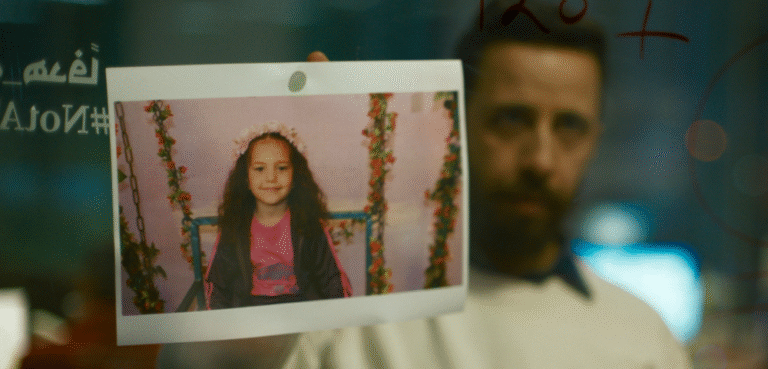
‘A Mirror’: A Brilliantly Prescient Rumination On Fascism And Art
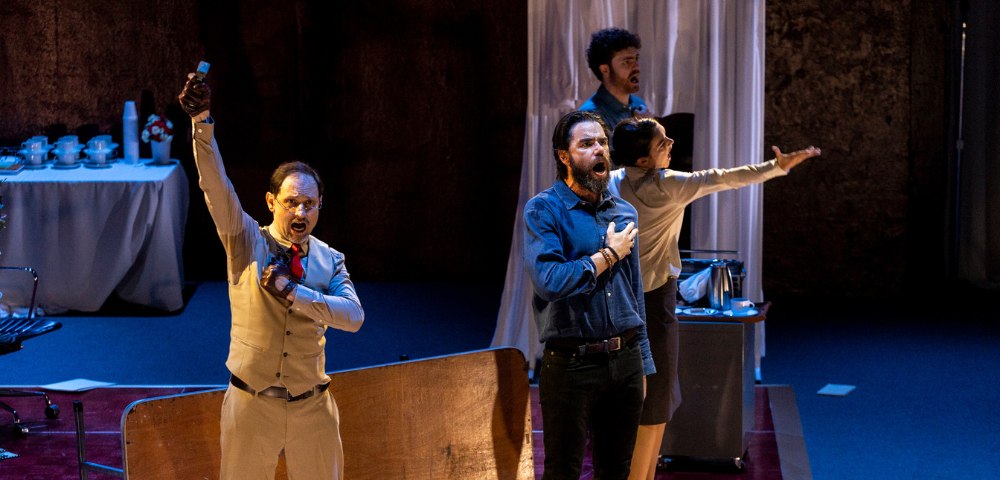
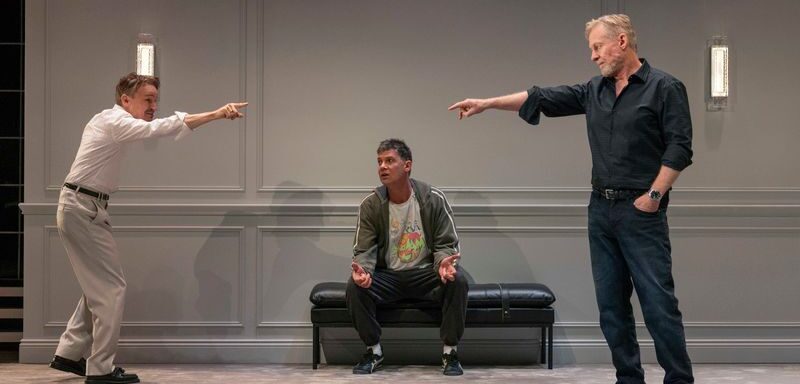
Image: Photo credit: Brett Boardman
When fascism rears its ugly head, art is usually one of the first elements of culture to be either stamped out or co-opted by the state. The reason why is simple: despite the ideology being anathema to creativity, these despotic buffoons are aware that art is an intangible source of power which can be utilised by the state, but never fully controlled.
Yet even in the face of coercion and co-opting by authoritarianism, people will put their lives on the line to create meaningful, truthful works that accurately represent the world around them. Such an idea is the basis for Sam Holcroft’s A Mirror, a tightly written and twisty modern play making its Australian debut with a sensational Belvoir Street Theatre production.
Presented as a play within a play, A Mirror situates the audience as attendees of a fake wedding that becomes an underground theatre production in defiance of a fictional fascist government. After a routine inspection by a guard, the wedding turns into the tale of Adem (Faisal Hamza), a veteran turned mechanic who’s decided to write a play based on the people of his apartment building.
Adem doesn’t know that his play is full of infractions, and his work would ordinarily have him be sent away for “re-education.” Alas, the play falls into the hands of Mr. Čelik (Yalin Ozucelik), a high-ranking officer at the Ministry of Culture who acknowledges Adem’s talent for prose. The play’s play sees Čelik influencing Adem to create art within the regime’s guidelines, with the help of an uptight officer Mei (Rose Riley) and fellow writer Bax (Eden Falk).
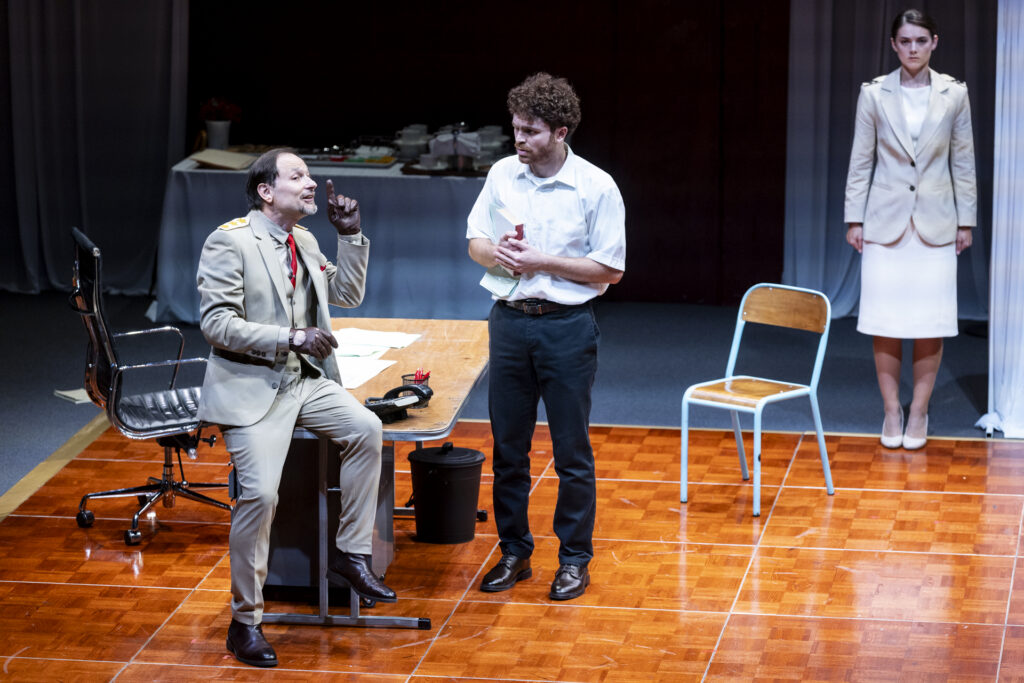
A deep dive into art, fascism and control
The constructed reality of A Mirror is one of its most fascinating creative choices. Unlike other shows which may briefly acknowledge the audience, Holcroft’s centres them as active participants in rebellion against a fictional authoritarian state, all willing to risk their lives to experience art that captures something genuinely real about their circumstances.
That construction makes for a fascinating sense of dual identity within each of the show’s characters. The facade of performance is occasionally broken by reports of officers in the area and the need to maintain the illusion of a wedding – just in case. This framing device strongly accentuates A Mirror’s strongest idea: that art which captures the truth of the world is of utmost danger to the constructed story of fascism.
Director Margaret Thanos utilises the Belvoir Street Theatre space beautifully for this, and watching the actors effortlessly transform the set from a wedding procession to a bureaucratic office space is wonderful. Once the play proper starts, the extra layer of reality means that it’s endlessly engaging to puzzle out the exact mechanics of the story being told while digging into its seriously meaty themes.
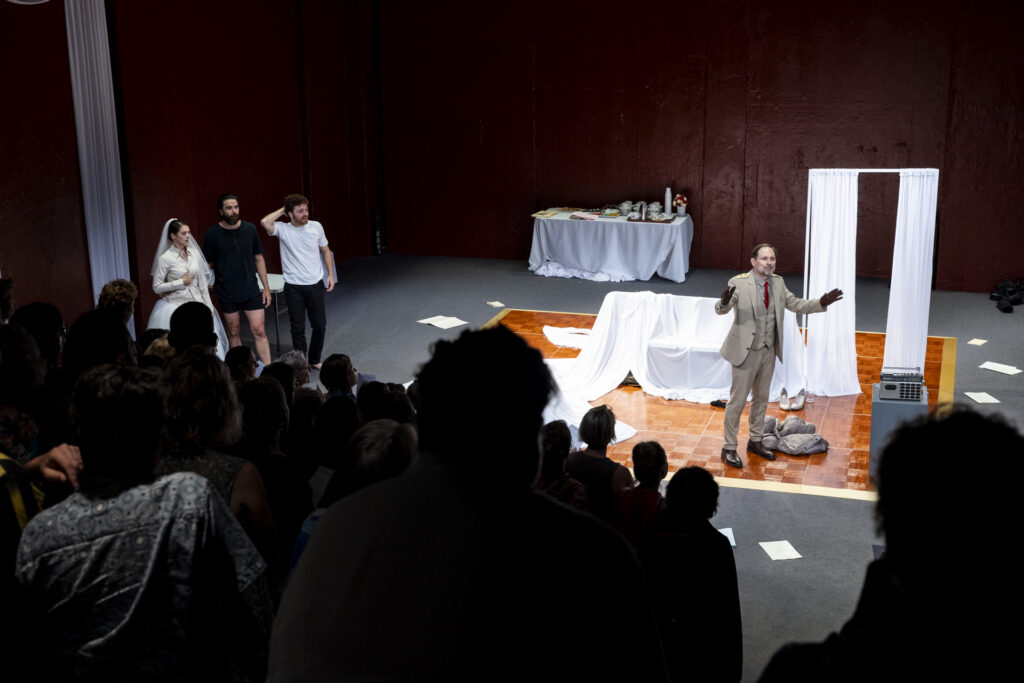
A Mirror at Belvoir has a standout cast
It also helps that A Mirror’s main quartet is truly wonderful, delivering Holcroft’s witty and wordy dialogue with seeming effortlessness. Faisal Hamza is delightful as a nervy Adem who finds himself way in over his head very quickly, though he finds a kindred spirit in Rose Riley’s Mei who has the most transformative performance in the show.
Eden Falk is similarly wonderful as the rockstar disillusioned writer Bax, whose consistent collaboration with the regime for years has obviously worn on him. But the standout performance is certainly Yalin Ozucelik as Čelik – or at least, his character playing Čelik.
A truly fascinating character who I can only describe as a fascist theatre kid, Čelik is scarier than his fellow cronies precisely because he knows how impactful art can be. Ozucelik captures his shrewdness in identifying opportunities for cultural domination, and he often makes Čelik seem quite likeable – a fact that adds to the sense that this man is a wolf in sheep’s clothing.
Čelik’s tacit understanding that art can inspire change – for good or ill – lies at the heart of A Mirror. Though smartly-written and brilliantly performed, it’s a play with lessons we may like to think we’ve already learned. Alas, the continual rise of authoritarian ideology both at home and around the globe proves exactly why it’s called A Mirror in the first place.
A Mirror plays at Belvoir Street Theatre until March 22nd, 2026.


Leave a Reply