
‘Opera For The Dead’: A Visceral Journey Through Grief And Sound
Rather than gently ushering, Opera for the Dead 祭歌 is an ambitious work that plunges its audience into an immersive exploration of grief.
Created by composer and Guzheng artist Mindy Meng Wang and sound technologist Monica Lim, the multi-media performance draws on traditional Chinese mourning rituals and fuses them with contemporary sound and digital spectacle, often creating an overwhelming sensory experience.
The show begins in a bottle green hallway before descending into a hazy room, sparsely lit by spotlights trained on hanging speaker woofers and podiums draped in stringy black. Mandarins reverberate across the space, producing stampedes of sound that crash into a moving overhead ringing, building tense anticipation.

The initial cacophony can be disorienting. But quickly, the piece finds rhythm and flow in its intensity, a techno-infused pulse that suits its cyber-opera ambition.
Clad in black clothing and minimally bedazzled eyes, five live performers—including Meng on Guzheng, Lim on electronics, vocalist Yu-Tien Lin, cellist Nils Hobiger, and percussionist Alexander Meagher—navigate this sonic and visual storm with precision.
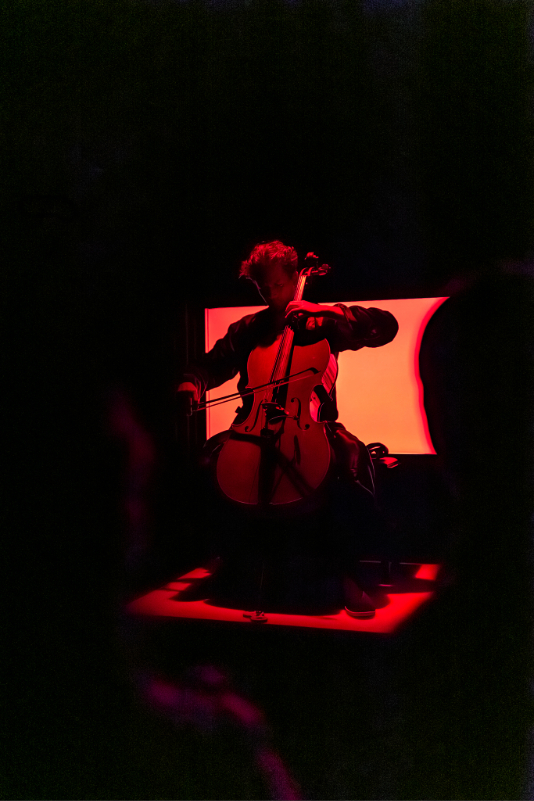
Hobiger emerges as an early standout with a raging cello solo, while Lin cuts through it all with a soulful, haunting voice. Each performer shines in their own moment, as drums thump, and voices wail in harmony, creating moments that feel raw, otherworldly and profoundly mournful.
View this post on Instagram
Straddling performance art, opera and live music, Opera For The Dead 祭歌 resists easy classification, often leaving the audience unsure whether to laugh or cry, but undoubtedly watch in awe.
Much of the vocal work is performed in Chinese, though translations are available via QR code before the show. Regardless, the emotion registers as guttural and immediate, a meditation on grief that transcends words.
At times, its density threatens to dull its impact, asking the audience to process more than the senses can absorb. Yet the work rarely loses its grip, maintaining a hypnotic pull.
Ethereal lighting shifts from dim intimacy to bursts of electrifying intensity, paired with totem-like visuals and projections of nature that shimmer around the performers. Recurring motifs, including the reappearance of mandarins later with coins, suggest cycles of offering, value and remembrance.
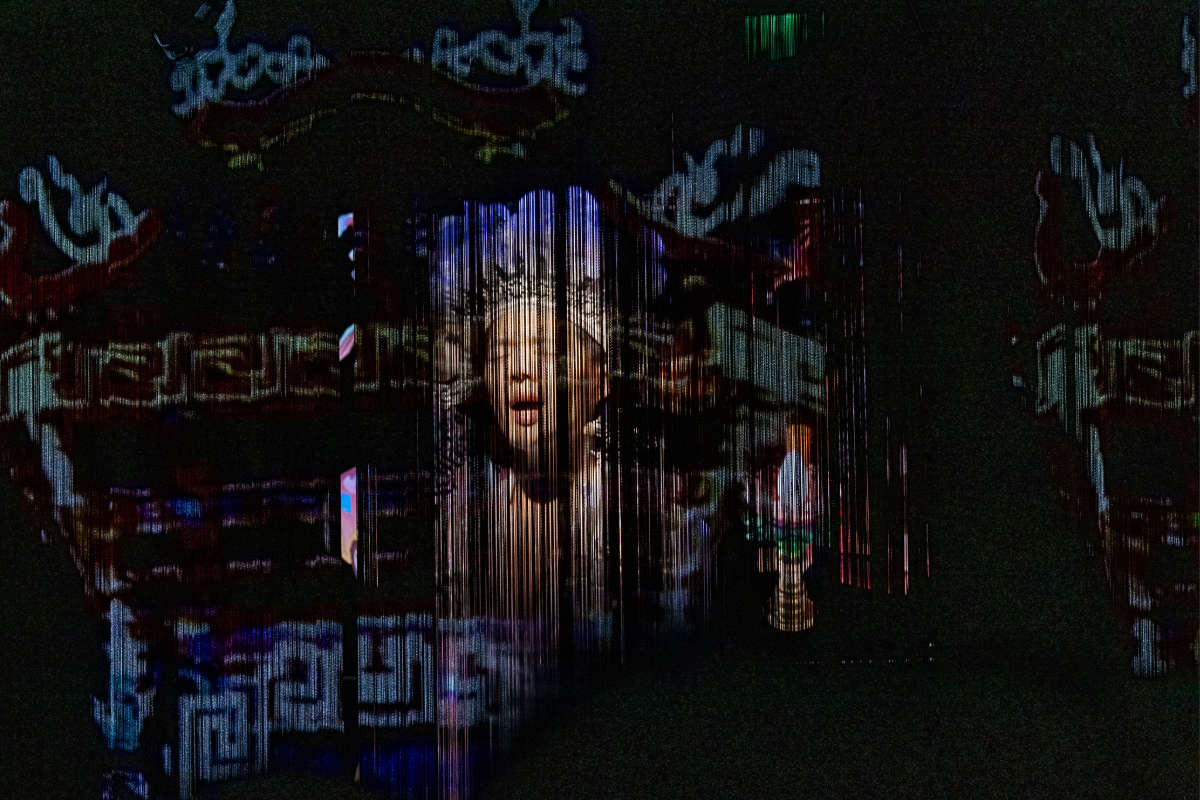
The interplay of light, movement, and sound ensures there is always something to catch the eye.
One minor sticking point is the standing-room format. With so many moving parts, the dark space can feel tricky to navigate and imbue hesitance in the audience, though the work’s intent remains clear.
Opera For The Dead 祭歌 thrives on juxtapositions—the eternal versus digital, spiritual versus material, performance and authenticity in grief—which linger in the body long after the lights dim.
This is a show that demands presence and endurance. Its intensity can exhaust, but the payoff is a dynamic immersion: a transcendent, multisensory journey that resists easy consumption and pushes the boundaries of music, performance, and ritual.
Far from conventional, Opera for the Dead 祭歌 is a rare, enthralling experience that cements Wang, Lim, and their troupe as voices to watch in experimental performance.
Opera For The Dead祭歌 is on at The Bell Shakespeare Theater as part of Sydney Festival till 18 January.