

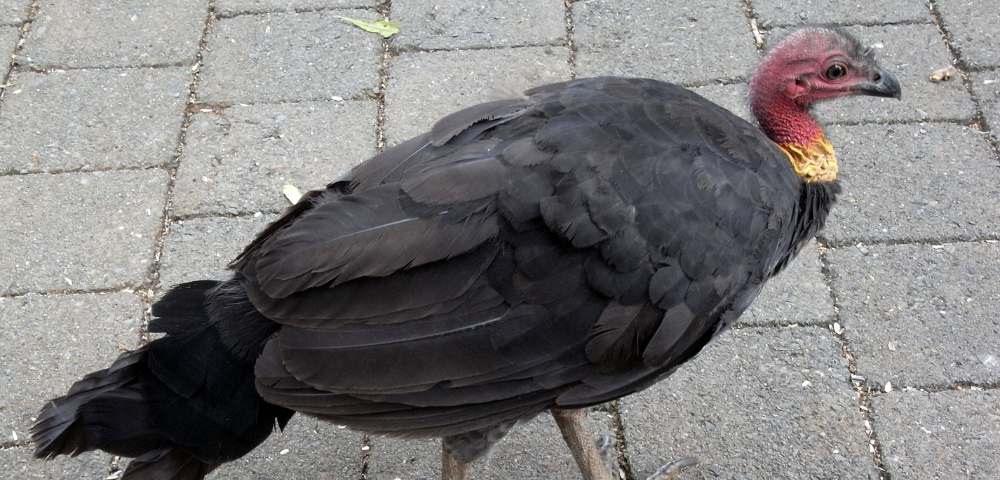
Image: A brush turkey. Credit Wikimedia Commons
Brush turkeys have expanded their presence across Sydney suburbs in recent years, with new reporting indicating a marked increase in their geographic spread and population density across the metropolitan area.
According to the citizen science tracking app Big City Birds, data now shows brush turkeys are present in around 300 Sydney suburbs, compared with an estimated historical footprint of about 20 suburbs concentrated mainly in the city’s northern areas. This represents a substantial expansion of the species’ urban range, with contemporary records showing established populations across much of Greater Sydney, including areas south of the harbour.
As they have proliferated, brush turkeys have become more brazen, vying with the ibis for human food. “They have become the cafe bird jumping on tables,” said Dr John Martin, the founder of Big City Birds.
As reported in The Sydney Morning Herald, brush turkeys are increasingly interacting with residential environments, particularly through nesting behaviour. Male brush turkeys construct large incubator mounds from leaf litter and soil, which can be found in private gardens and parkland. These mounds, used for egg incubation, are a defining feature of the species’ breeding cycle and have contributed to their visibility in suburban areas.
Brush turkeys were significantly reduced in number during the early to mid-20th century due to hunting and egg collection, before becoming a protected native species under conservation legislation. Brush turkeys had previously been largely confined to northern Sydney bushland before more frequent sightings emerged in inner and southern suburbs in the early 2020s. Researchers describe the movement into new areas as occurring rapidly in recent years, although the mechanisms by which the birds traverse urban barriers such as the harbour remain unclear.
Recently, a brush turkey that was injured by an arrow on the NSW Central Coast months ago was rescued, with the shaft still embedded in its shoulder. Residents and wildlife carers had been on the lookout for the injured native bird, affectionately known as Arrowyn, since it was first spotted with the arrow sticking out of its back last October.






Leave a Reply