

‘NAZA’: A Fearless Documentation Of Modern Genocide
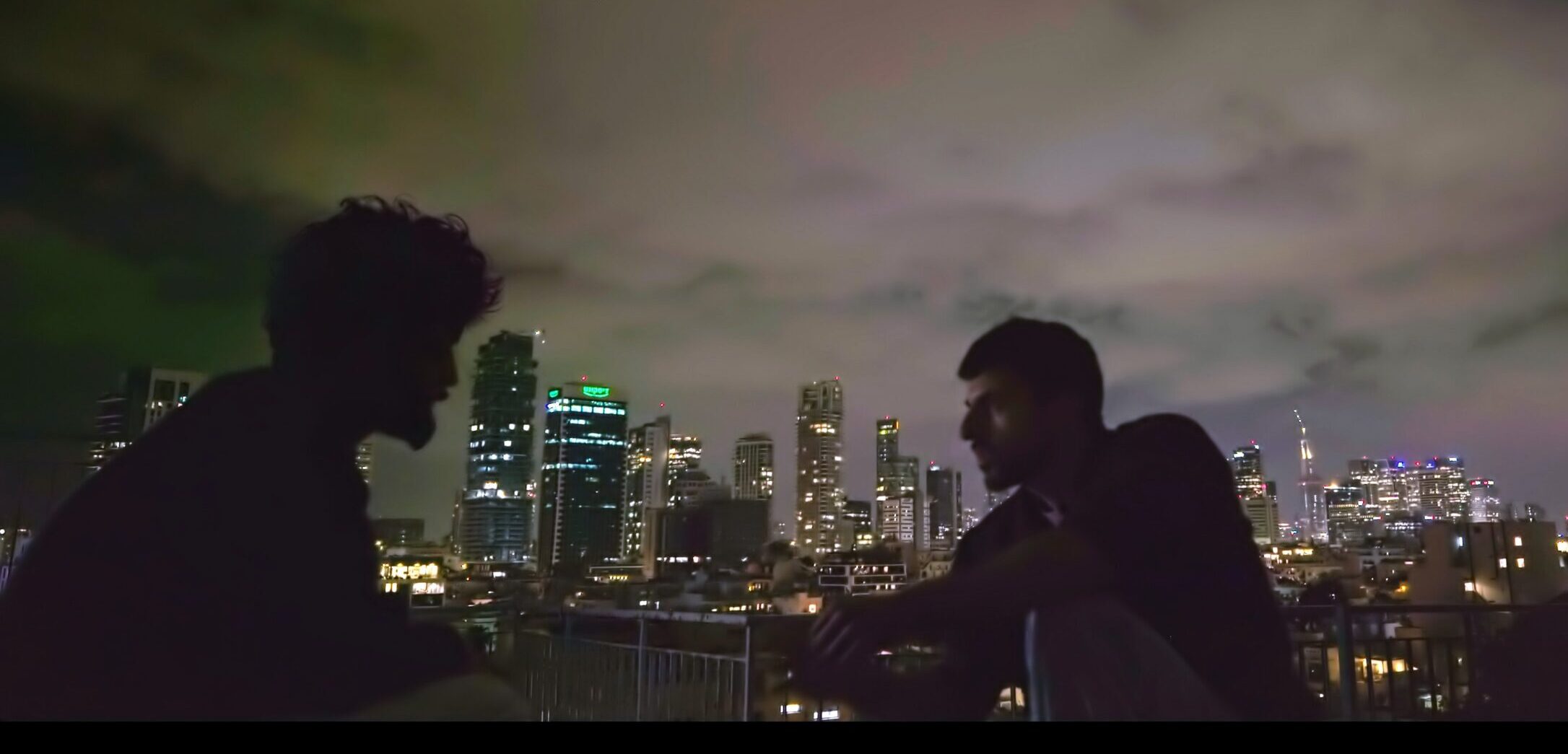
Image: Source: The Guardian
In the past week, news broke that Google Maps had updated its aerial photographs of Gaza for the first time since 2023. These fresh aerial views don’t confirm anything new – Israel’s genocidal campaign on the Gaza strip is well-documented at this point – but comparing the before and after photos paints a haunting picture of the devastation at scale.
As Palestinian suffering has become a fact of digital life in the last three years, it has been easy to think of Israel’s genocidal apparatus in the abstract. That’s precisely why NAZA, a stunning documentary from Oscar-winning filmmakers Yuval Abraham and Rachel Szor, is so important: it turns an eye onto those within the machinery of the IDF who have helped to cultivate this unspeakable crime against humanity.
Put in the simplest terms, NAZA is an act of journalistic bravery. Shot almost entirely on the rooftops of Tel Aviv at night, the film sees director Abraham directly interviewing 24 members of the IDF who have had a direct hand in either enabling or directly perpetrating the genocide in Gaza. Some are those who have bombed hundreds, if not thousands; others are the architects of the AI-based systems that Israeli forces use to track the movements of every man, woman and child in Gaza.
‘NAZA’ is an acronym for collateral damage, and is referred to in the film’s interviews as the acceptable number of casualties when killing supposed terrorists. Shrouded by the darkness of night, these soldiers and intelligence operatives explain how the AI-based system works and the amount of casualties – including children – that are permissible. The average is probably about 20, but numbers in the hundreds are often cited.
NAZA reveals the systems that enable modern genocide
The very existence of NAZA feels like a miracle; it’s difficult to imagine how Abraham and Szor managed to find Israelis undertaking this genocide who’d be willing to speak so candidly about it on camera, even under the guise of anonymity. Their transparency is brilliantly juxtaposed with cold, distant shots of Tel Aviv at night that are usually lit up by the glow of a news channel where Netanyahu is never too far away from an appearance.
These bizarre tableaux of Israeli life give the impression that the worldview spouted by Netanyahu and his cronies – that of a righteous war between good and evil – is a construction. An ad for a Claude Lanzmann retrospective is placed next to the confessions of IDF members as they acknowledge the mass murder and ethnic cleansing they’ve committed: the irony and complicity on display is obvious.
Abraham is also an astute interviewer, always giving his subjects the right amount of room to explain their actions while also latching onto some of their truly heinous confessions with a well-placed anger. This makes it all the more disturbing that surprisingly few of the soldiers interviewed in NAZA have the kind of rabid, genuinely fascist worldview that Netanyahu and his supporters have.
No, their evil is much more banal in that they freely admit to essentially “just following orders” as cogs in the machine, and the camera captures their active struggles with fully understanding the gravity of what they say. Many moments show this: soldiers essentially admitting they’re “just following orders”, comparing drone strikes to playing video games or recounting how they went out for a night on the town after bombing Palestinians.
“I still think those Nazis are evil, but what does that mean I am?”
But one of the most harrowing scenes comes towards the end of the film, when one of the soldiers freely admits that what Israel is doing is genocide. He admits that he “understands” what the Nazis felt, how they could carry out the Holocaust while returning home to their lives while carrying out these acts of unspeakable violence.
“I still think those Nazis are evil,” he confides in the camera, “but what does that mean I am?” When Abraham asks him directly if he ever considered his actions wrong while he was carrying them out, he admits he did not. Such disturbing honesty is what will ensure that NAZA remains an essential text in the documenting of this modern genocide, and place it on the right side of history in the years to come.
★★★★★
NAZA is in Australian cinemas October 15th, and will be available on the Guardian website in late November.






Leave a Reply