

‘Hamnet’: Jessie Buckley Stuns In Devastating Meditation On Grief
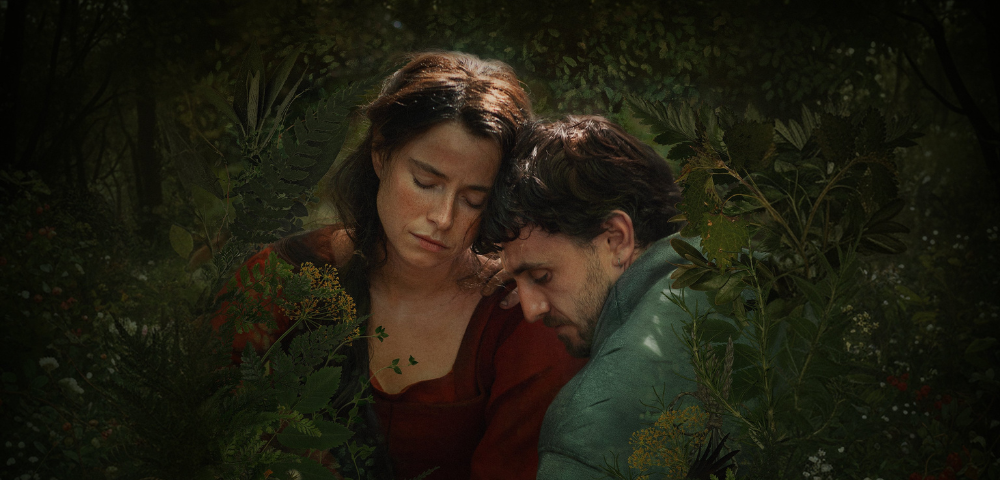
Image: Source: TMDB
Although there are scantly few historical documents that suggest a direct link between the death of his son and his seminal work Hamlet, the imagined grief of Willaim Shakespeare and his wife Agnes takes centre stage in Chloé Zhao’s Hamnet.
A piece of speculative historical fiction that’s based on Maggie O’Farrell’s novel of the same name, Hamnet is hardly a historical lesson; instead, it’s an investigation into the nature of grief and how it dictates the artistic process through the eyes of Shakespeare’s wife Agnes (or Anne) Hathaway, portrayed by a brilliant Jessie Buckley.
After a speedy courtship and a pre-consummation of their vows, the young couple Agnes (Buckley) and William (Paul Mescal) are wedded. For her knowledge of herbal lore and connection to nature, Agnes is generally considered an outcast: of fairly little import to the smitten William.
As his career takes off, William is spending more and more time in London away from the regional family home, leaving Agnes to care for their three children by herself. But this is the 16th century where plague abounds, and a tragedy will soon tear its way through this family: the best parts of Hamnet lie in how it navigates the various responses to this unfathomable loss.
I’ve not been the biggest fan of Zhao’s previous work – particularly her Best Picture-winning effort Nomadland – which I mention to give credence to how much I enjoyed Hamnet. Given that it’s about the death of a child, it’s not a strictly entertaining film, but there’s a very diligent sense of storytelling on display here that I found myself connecting with.
I connected with this in spite of the aesthetic of Hamnet, which was a bit too digitally washed-out for my tastes. Although I appreciated Łukasz Żal’s overall approach to cinematography, I felt the film’s colour grading and overall method of focusing the lens didn’t really convey the historical period it was set in and severely undersold the beautiful costuming and setwork on display here in a distracting way.
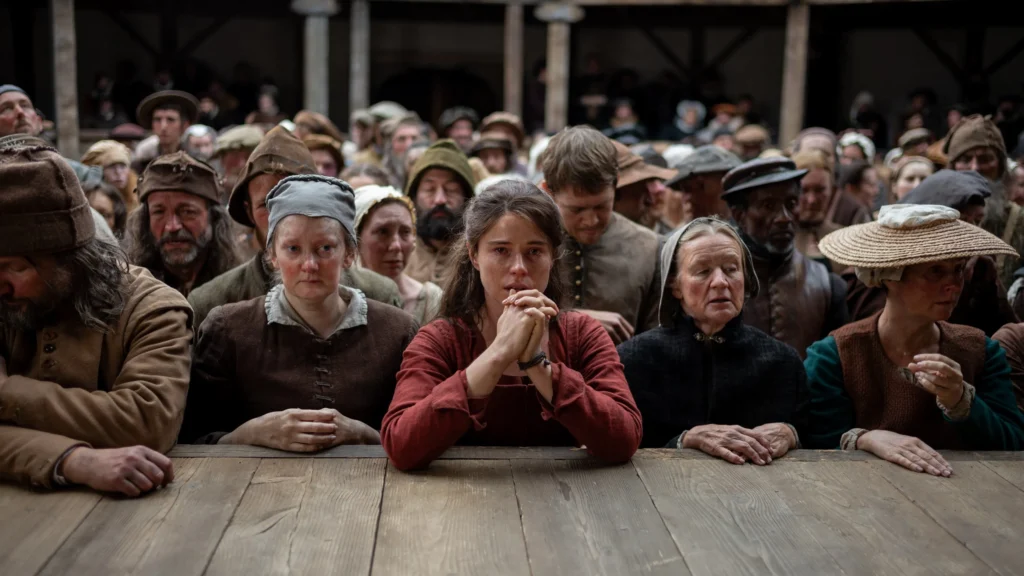
Hamnet aims to devastate, and succeeds
Nonetheless, the film is apparent in its desires to shoot for more emotional truths, with Zhao and co. achieving this beautifully. A large part of the success lies on the shoulder of Hamnet’s core trio of actors: Jessie Buckley as Agnes, Paul Mescal as William Shakespeare, and the young Jacobi Jupe as their son Hamnet.
Anyone who’s been paying attention to her career won’t be surprised to see Buckley turn in another sensational performance, but it’s still one of her best and most emotionally poignant roles to date that serves as an intricate portrait of grief. She embodies the heaving physicality of grief in an impressive, deeply upsetting way.
Meanwhile, Mescal turns in a sensitive, wonderful performance as Shakespeare that, again, shouldn’t shock anybody who’s seen Mescal in recent work but is still no less delightful. But the real breakout of Hamnet for me has to be Jacobi Jupe as the young Hamnet – it demands quite a lot of the lad, but he meets it head on to create one of the best child acting performances of the decade thus far.
These performances work in tandem with a tight script that explores the nature of grief and the inherently preservative effects of art. It culminates in an ending that’s easy to predict – especially given the film’s subject matter and name – but that still hits like a freight train thanks to how wonderfully executed it is.
Like the rest of the film, the ending may not be particularly subtle, but it functions wonderfully as a tour-de-force of emotional filmmaking. When a film has performances this good that drive the storytelling forward, it’s difficult not to feel something – and believe me when I say Hamnet will make you feel a lot more than just ‘something’.
★★★★
Hamnet is in cinemas from January 15th.







Leave a Reply