Civil Groups Urge NSW Police To End Protest Restrictions Ahead Of Australia Day

Image: mehreenfaruqi/Instagram
With the NSW Police protest restrictions due to expire on Tuesday, lawyers and civil liberties groups are urging Commissioner Mal Lanyon not to extend it, warning another extension could shut down lawful gatherings as Australia Day rallies near.
The 14-day ban was imposed on Christmas Eve under new powers introduced after the Bondi attack and renewed on January 6 for another two weeks.
Civil society organisations say a further extension could block major demonstrations, including long-standing First Nations protests on January 26.
Groups led by the Australian Democracy Network (ADN) said prolonging the protest restrictions would undermine and prevent NSW communities from holding marches, rallies, and other culturally and politically significant events.
“We are concerned about the impact these restrictions will have on the capacity of communities to gather, particularly around the traditionally significant First Nations protests on January 26,” the letter states.
If extended, organisers would be unable to secure legal approval for protests or marches involving road closures or large crowds, leaving participants at risk of fines or arrests.
A NSW Police spokesperson said no decision has been made yet. According to the law, the declaration can be extended for up to three months after a terrorist attack.
“The declaration will be reviewed closer to the end of the 14-day period with consideration to the ongoing community safety impacts of further protests,” the spokesperson said.
Acting Minister for Police and Counter-Terrorism Paul Scully said any changes will be assessed through a public safety lens and decided by the NSW Police Force.
The letter is backed by eight organisations, including the Inner City Legal Centre, Redfern Legal Centre, NSW Council for Civil Liberties, Amnesty International and the Media, Entertainment and Arts Alliance.
The groups argue the ban goes against Australia’s international human rights rules which require protest restrictions to be necessary and proportionate.
“An unspecified risk of violence…is not enough,” the letter details.
“The State must be able to show, based on a concrete risk assessment, that it would not be able to contain the situation, even if significant law enforcement capability were to be deployed.”
ADN campaigner Anastasia Radievska said the law sets the bar too low and leaves no clear way for protesters to challenge police decisions.
“We want there to be protection for people who are participating in those protests. We don’t want them to be wondering whether they’re going to get arrested for being on a road or in fact for taking up space on a footpath,” she said.
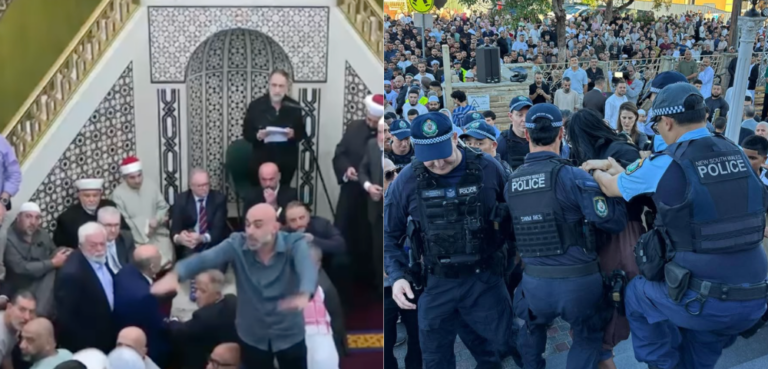
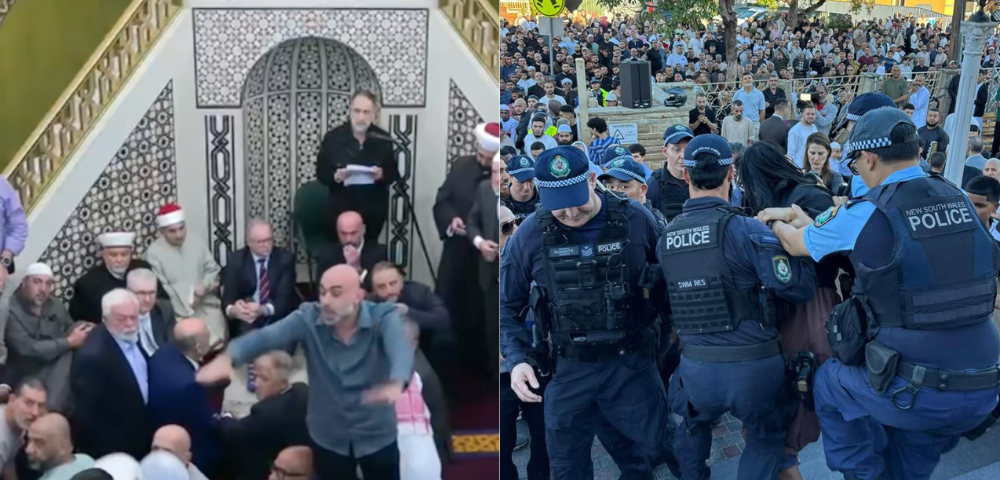
Despite the restrictions, a stationary rally opposing war crimes in Gaza and the protest laws themselves went ahead near Sydney Town Hall on Friday night, watched by riot police, mounted officers and dozens of uniformed police.
Four people were moved on to prevent a breach of the peace, and a counter protester carrying a “Blame Hamas” sign was arrested but later released.