
Sonic Spaces: Seeing Germ Studies at Hyde Park Barracks Was Captivating
Sonic Spaces: Seeing Germ Studies at Hyde Park Barracks Was Captivating is a review by Angus Sharpe.
One of the most beautiful qualities of music is its ability to react to space.
You can experience it when you gaze out a bus window, headphones in your ears, and your music synchronising with the world passing outside.
You can experience it when you attend the same music venue on two different nights, wildly different acts taking to the same stage, moulding it into their own unique shape.
And sometimes, you can be lucky enough to experience it when you find music being performed in a space it should be foreign.
A cave? A beach? A tunnel? An old convict sleeping quarters?
Setting is often as much an instrument to an artist as the ones they hold in their hands.
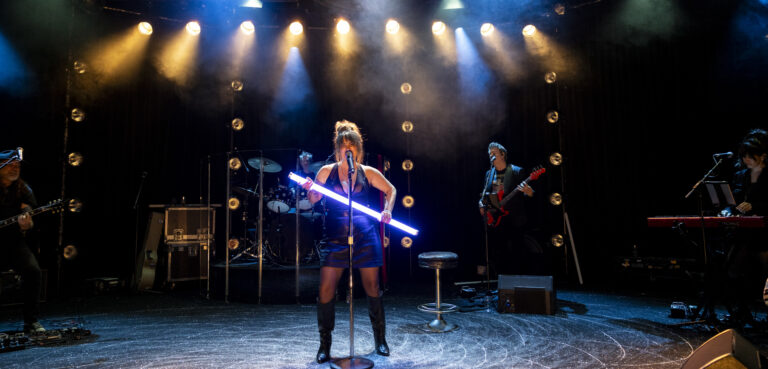
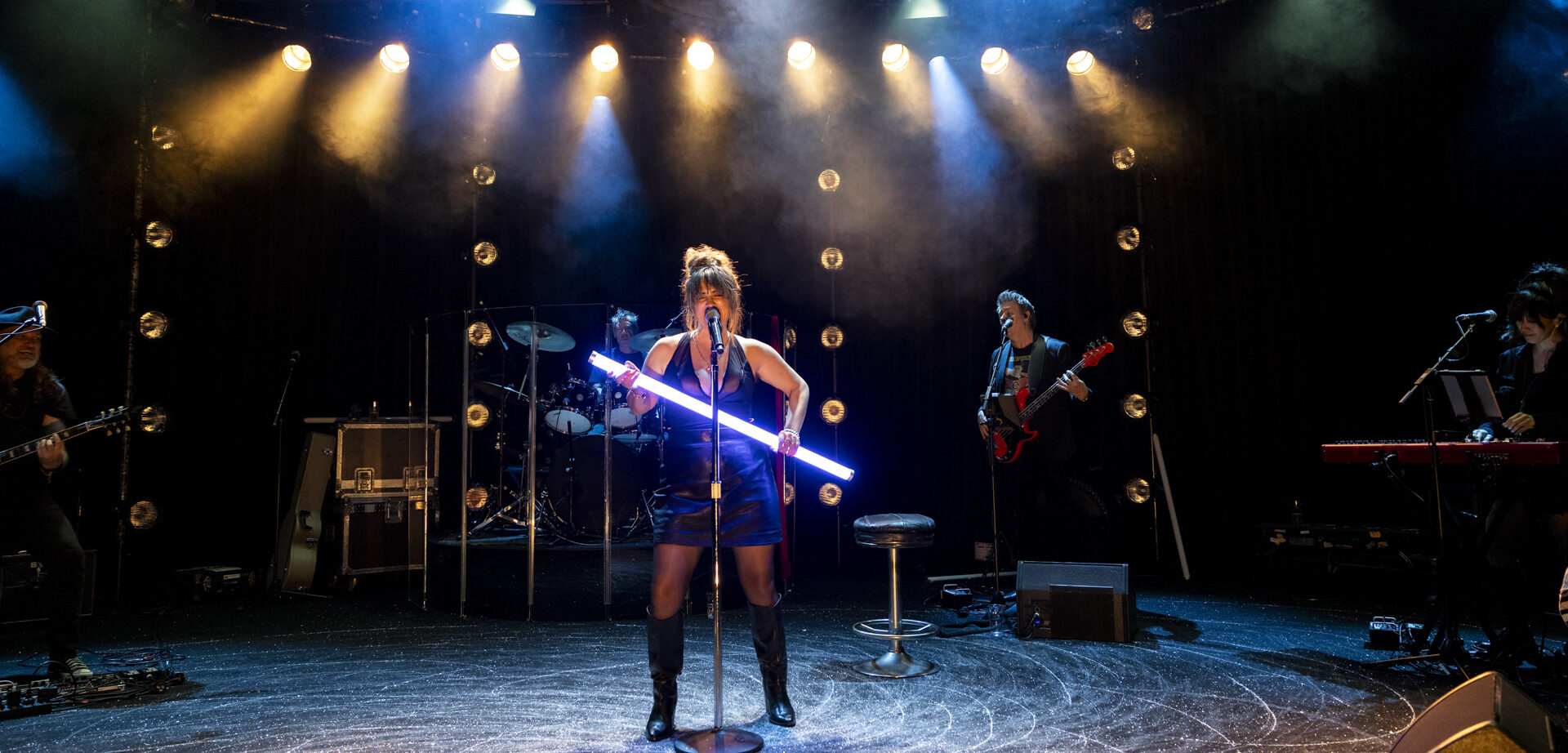
Thus was my delight at having the opportunity to see Germ Studies: A duo made from pianist Chris Abrahams, and harpist Clare Cooper, in The Hammock Room at the UNESCO world heritage listed Hyde Park Barracks last Friday evening.
As part of the ‘Sonic Spaces’ series, the purpose of this performance was to ask: ‘Can music change the way a space makes you feel? And can a space change the way you interpret music?’
Yet, before any music could begin, the first thing I noticed on entering the old convict dormitory was a deep red glow.
The weathered wood of the ceiling, the old bricks of the floor, the thick rope holding the rows of hammocks to the walls were all bathed in an ominous red. So strong was the effect of this glow that as I made my way down the centre of the room looking for a spare hammock – despite the exquisitely preserved history of the room – I felt I had found myself in a science fiction film.
This feeling – of past meeting the future – was only heightened as the music began.
Finding a hammock within the cacophony of nervous giggling, I rested my head strangely close to my neighbours’. Contributing my feet to the dense forest of raised socks and boots, I waited as a low hush filtered in.
Into this hush Abrahams and Cooper emerged.
Without a word they mounted the small stage in the centre of the room, hardly visible within the forest of feet, and began their slow, captivating performance.
Chris Abrahams – one third of the Australian improvised jazz trio The Necks, is famous for his ability to improvise. Behind the grand piano he can morph any stage – from the Sydney Opera House to a salt mine in Krakow – into a canvas for breathtaking moments of art.
Yet tonight rather than his fingers finding ivory keys, Abrahams melted into the textures of a 1980s Japanese DX7 synthesiser. As if commanding the deck of a Star-Trek spaceship, with this instrument he delivered an eerie, alien-like swirl to the intimate room.
Remaining for a moment – the electronic sound trickled through the air before gradually it was joined by a slow hammering on the strings of a traditional Chinese guzheng.
Clare Cooper, who sat less than a metre across from Abrahams, was responsible for this new sound. Famous for her exploration of how harp-like instruments can elicit unique and exciting noises, she then began to flex her creative muscles.
With a violin bow and a variety of drum sticks in hand, she attacked the ancient Chinese string instrument with a child-like charm – meeting Abrahams’ ambience with captivating textures.
And so, for the next hour it was this contrast of old and new that prevailed.
In an interview afterwards, Abrahams told me that during the performance he felt the gravitas of the building – especially the unpleasant actions which had been performed inside it. And as I listened to the music, I felt something very similar.
I could not escape thinking of the hardness contained in the stone around me. Of the hundreds who had called this cold dark room their home. Of the foreign history so close at hand.
Yet, on occasion the modern world – ambulance sirens from the Sydney CBD outside – would break through this stone.
Reminders that the modern world beyond these weathered walls had continued to move forward.
In these moments, the two musicians welcomed the intrusions with open arms, incorporating them with expert ease into their ever-expanding pieces.
Finally, as the hour concluded, we erupted from our hammocks in applause. Abrahams and Cooper – in a breathtaking performance – had responded to the collision of history and progress beautifully – drawing a truth from the walls only music could ever do.