‘28 Years Later: The Bone Temple’ Is The First True Sequel To ‘28 Days Later’
Unlike its enjoyable but scattered predecessor, 28 Years Later: The Bone Temple goes every bit as hard as a movie with its subtitle should. Where the first installment in Danny Boyle and Alex Garland’s new trilogy of zombie movies in the 28 Days Later franchise felt afraid to commit to its big ideas, Nia DaCosta decides to absolutely go for it in The Bone Temple, and succeeds in doing so.
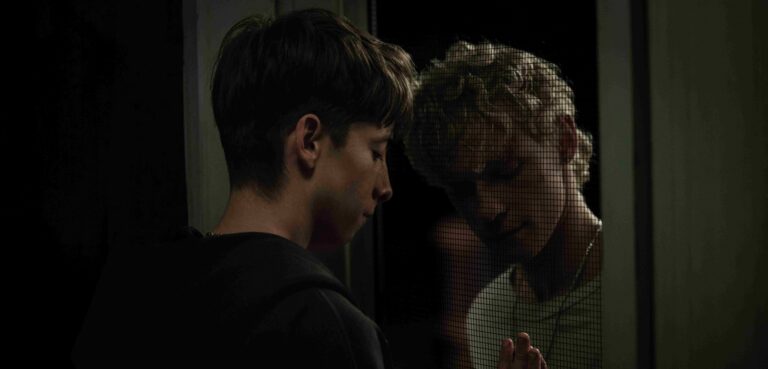
The film begins on a substantially more dour note than the ending to 28 Years Later may imply. Spike (Alfie Williams) has been forcibly adopted by the ‘Jimmys’, a cult headed by the insane Sir Lord Jimmy Crystal (Jack O’Connell) and bears witness to the depths of human cruelty in the apocalypse.
Meanwhile, Dr. Ian Kelson (Ralph Fiennes) continues to build the ultimate memento mori in the Bone Temple while forming a strange relationship with Samson (Chi Lewis-Parry), an alpha infected, in whom he begins to ascertain how the infection works. That is, at least, until the Jimmys come knocking.

A substantial step-up from its predecessor
Compared to the first 28 Years Later, The Bone Temple is a work substantially richer in themes, character and craft that, to be fair, can only exist as a result of the foundations laid by that film.
But where that film’s tone was confused and left many interesting ideas on the table, DaCosta and screenwriter Alex Garland find a substantially better balance that I think, despite abandoning the grimy and low-budget aesthetic, makes this film the first true successor to the original 28 Days Later.
Like many of the genre’s best films, DaCosta achieves this by eschewing constant undead action – which is still fantastically gruesome when it happens – in favour of human drama, asking questions about the depths of our depravity. Are we truly capable of sinking to the level of Jimmy Crystal’s twisted violence? And are we brave enough to attempt understanding of the unknown like Dr. Kelson?
These two characters and the immensely talented performers who portray them are key to the success of The Bone Temple. Jack O’Connell continues his horror movie villain hot streak with Jimmy Crystal, who believes himself the son of Satan while styling himself after British media personality and prolific sex pest Jimmy Savile.
Thanks to O’Connell’s terrifying and electric performance, Jimmy’s actions serve as a commentary on control. Besides the terrified Spike, his cronies are younguns looking for answers in this bitterly cruel world rocked by the rage virus. Jimmy knows this, and takes advantage of it – he knows that he can lie or contradict himself, because the illusion is what matters most.
Even if he doesn’t know what we do about Jimmy Savile, the parallels make the message clear: this is what happens when evil and twisted men are given unchecked power, shot with a tangible sense of violence courtesy of DaCosta and her crew.

Ralph Fiennes shines in The Bone Temple
Alternatively, Dr. Kelson feels like one of the last bastions of goodness in this world. He’s not completely there – he is creating a massive temple out of human remains, after all – but he shows a willingness to connect with his fellow people, no matter if they are an insane cult leader or a hulking infected alpha.
Horror has always been a genre where capable actors can strut their stuff, and I struggle to think of a recent performance from Ralph Fiennes as good as the one here. He effortlessly captures the totality of emotion that a human being holds in Kelson, making it particularly interesting when the movie’s two plots collide.
His screentime oscillates between lonely and humourous, and he especially shines when paired with his scene partners. There’s also one scene spearheaded by Fiennes in the third act that feels destined for horror movie history – you’ll know the one.
The Bone Temple uses these characters as a basis for the yin-yang of human morality that comprises the wider cast. Alfie Williams is still great as Spike, even if he has much less to do; Erin Kellyman shines as one of the disillusioned Jimmys, and Chi Lewis-Parry is surprisingly tender as the infected Samson.
Distinctly unlike the other sequels to the original 28 Days Later, I walk away from The Bone Temple impressed with its ambition and gall to do things differently. It’s a wickedly fun, self-assured movie that’s also an exceptionally rich examination of the human psyche in times of crisis through its fantastic actors. If you’ve ever found yourself bored with modern horror films, this is the cure.
★★★★
28 Years Later: The Bone Temple is in cinemas now.