
Image: Wikimedia Commons
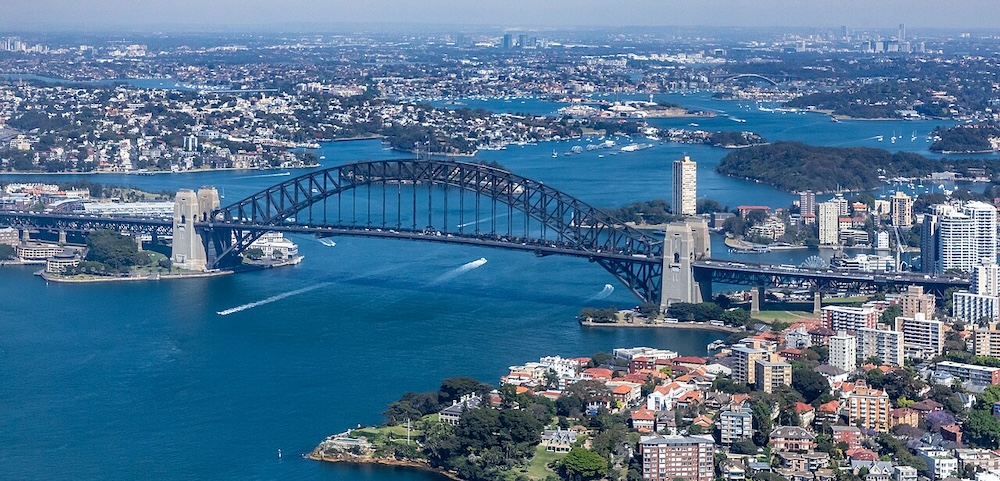
Sydney is losing residents to the rest of the country, amidst housing unaffordability and citywide growth from overseas migration.
The analysis which revealed these facts was conducted by Primara Research for financial services company OurTop10. It painted a grim picture, finding that in the 2024 fiscal year, Sydney lost 104,231 residents through internal migration, whilst gaining 63,145 from elsewhere in Australia. A net overseas intake of 120,886 resulted in overall population growth of 79,800 across the city.
Sydney would have shrunk by 0.3 percent had no one arrived in or left the country.
Primara Research later stated that every other Australian city of at least 500,000 residents “grew from domestic factors alone.”
The company highlighted a “consistent” pattern of “families moving to Queensland, regional New South Wales, anywhere housing costs less,” and was emphatic on the implications of such bloodletting.
“Overseas migration is masking what’s actually happening. Without it, Sydney would be shrinking.” Affordability “isn’t just slowing growth. It’s reversing it.”
“The question: how long can overseas arrivals paper over a city that can’t retain its existing residents? Or will it just keep happening?”
“Chronically unaffordable” housing costing Sydney over $10 billion annually
Jeremy Gill is the Head of Policy at the Committee for Sydney, a think tank. “We’ve always seen internal migration out of Sydney, being the first place many migrants arrive and settle in Australia,” he told the City Hub.
“Once they’ve got a better grasp on the options for housing, work and quality of life, new migrants will make the call on whether Sydney’s the best place for them long-term – many will stay in Sydney, but plenty move out of the city too.”
Whilst this remains the same, there has been a change. “The difference between now and even ten years ago is how chronically unaffordable housing is – our research shows it’s costing Sydney more than $10 billion per year in lost productivity, talent and innovation.”
“It’s getting tougher and more expensive to live in Sydney, especially for groups like students, creatives and essential workers who are vulnerable to rent pressures and often on lower incomes. It’s not surprising that many are moving interstate in search of greener – and more affordable – pastures.”
“Solving this quickly is incredibly challenging but if we want to keep people in our city we need to invest in more social and affordable housing, deliver more homes that meet a range of needs in well-located places while ensuring they have good transport connectivity and community infrastructure like open spaces, schools and shops.”
“No real relief in sight” for home-hopefuls
Finance expert Mansour Soltani recently wrote an article for OurTop10, noting that NSW “is expected to add close to one million residents by 2034, with more than 650,000 of them settling in Sydney.”
“That puts extra pressure on a housing market that already struggles with undersupply.”
“Migration is another layer. Returning expats and steady overseas arrivals are keeping demand high in Sydney, even as some interstate movers are drawn to cheaper capitals like Brisbane, Adelaide and Perth. For Sydney though, the population pipeline means there’s no real relief in sight for buyers hoping demand will ease.”
Recent national discourse on housing affordability has focused on both housing construction and stemming immigration. The Albanese Government says that it is making progress on spurring construction and is assisting younger Australians to buy their first home whilst bringing down migration numbers. Liberal MPs have called for greater cuts to the intake, which surged following the relaxation of pandemic-induced restrictions.
Contacted by this masthead, the office of state housing minister Rose Jackson referred questions to NSW Fair Trading, which regulates the private housing market.