Sydney Fish Market Opening Hit With Ferry Delay Until 2027
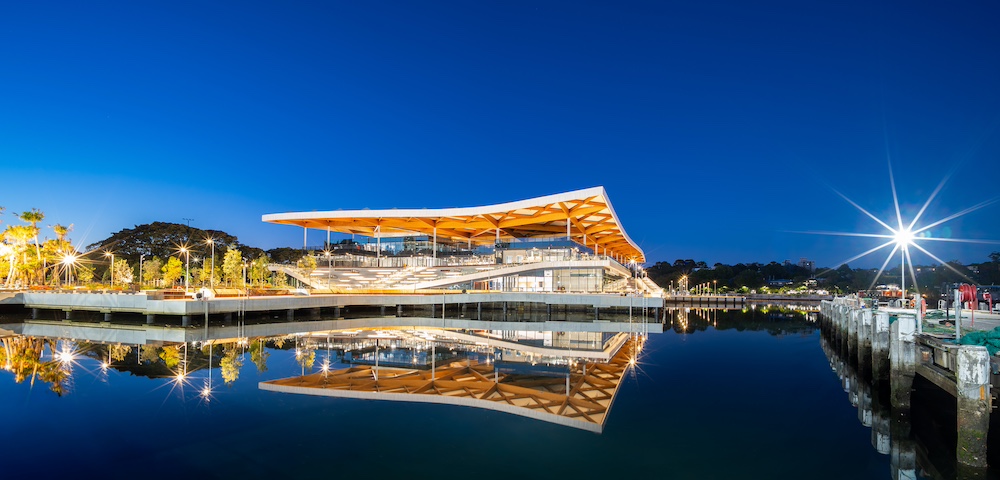
Image: Supplied
The new Sydney Fish Market is set to open on 19 January with expectations of fresh seafood, waterfront dining, crowds in millions—and one major catch as visitors face a year-long wait for ferry access.
The $836 million Blackwattle Bay destination is expected to draw double the traffic of the old Pyrmont market, but with no wharf built yet, ferry services won’t be ready until at least 2027.
That leaves just 400 car parks and public transport to move the masses, meaning buses, light rails and plenty of juggling seafood for anyone riding out.
To handle the surge, Transport for NSW has added extra evening and weekend services on the L1 light rail, while the nearby Wentworth Park stop is undergoing a $40 million upgrade. These temporary measures aim to prevent chaos and congestion while ferry access remains a distant promise.
Plans for a $30 million pontoon wharf on the market’s eastern side are still in the design stage. The floating structure will allow passengers to board and disembark safely once complete. Initial services are expected to run as a shuttle between Barangaroo and the market, partly testing demand.
Parramatta-class or First Fleet ferries are likely candidates for the waterways, though the wharf will ultimately need to accommodate Emerald-class ferries, which can carry around 400 passengers.
Blackwattle Bay location poses further hurdles for Sydney Fish Market
Glebe rowers have raised safety concerns about congestion in Blackwattle Bay, while authorities may need to remove some existing maritime infrastructure to allow ferries to navigate safely, as per the Sydney Morning Herald.
Action for Public Transport spokesman Graeme Taylor said consultation alone could take six months, followed by tendering and construction, meaning the wharf could easily take more than a year.
Taylor warned that opening the market without ferries could turn into a publicly embarrassing headache.
“This is poor planning. The ferry service should have been there from day one. They have known for years,” he said.
The market itself has had a long and turbulent journey. Construction delays, rising costs—from $750 million to $836 million—and logistical challenges marked its development.
The new building doubles the retail space of the old market with more than 15,000 square metres for seafood, specialty food, 3,000 outdoor seats, and sustainability features such as solar panels, rainwater collection, and a marine habitat beneath the building.
Transport for NSW said it is working closely with Infrastructure NSW to deliver the wharf by 2027 and will monitor passenger numbers to determine vessel size and frequency. The wharf will include both commercial and recreational berths ahead of the fish market’s booming traffic.
Until then, the new Sydney Fish Market will rely on land transport, a reminder that even Sydney’s flashiest waterfront destinations need functional routes to match the hype.