

Public Transport Increased As Great Western Highway Closes For Three Months
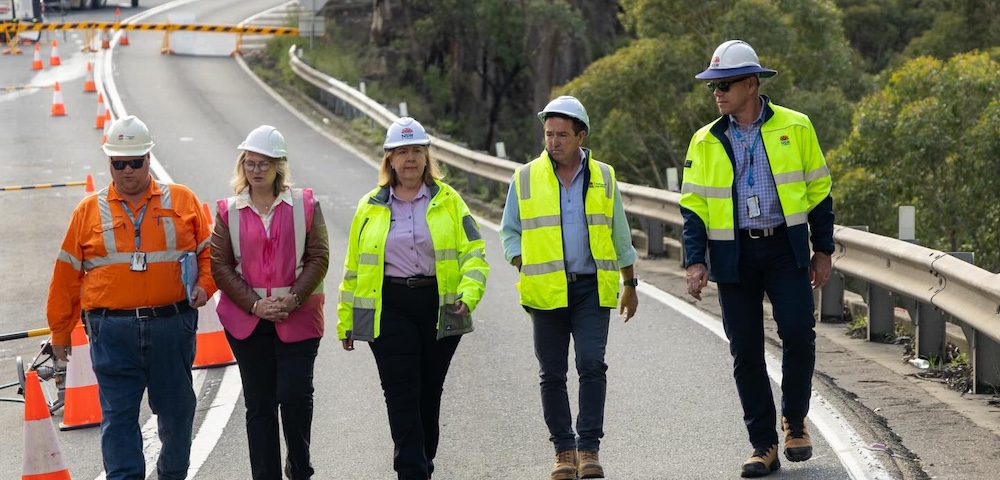
Image: Jenny Aitchison MP/Facebook
The Great Western Highway will remain closed for at least three months, with the New South Wales government orchestrating a mass reorganisation of public transport to accomodate communities.
“I understand that this is difficult news, but people deserve honesty and they deserve clarity,” said Roads and Regional Transport minister Jenny Aitchison.
“This is not a short-term repair job. We are dealing with a major geotechnical failure on a fragile and historic section of road, and it must be assessed and repaired properly.”
Eastbound lanes along the Mitchell’s Causeway were closed last Thursday after staff detected cracking, with the entire road shut after more movement in the 194-year-old bridge.
Additional trains, coaches, and buses are being rolled out to support Blue Mountains and Central West communities.
Westbound vehicles that would usually use the Highway are being redirected via Lithgow to the Bells Line of Road and the Darling Causeway, adding up to 25 minutes to a crossing of the Blue Mountains.
With increased traffic across Lithgow, including hundreds of trucks being forced to take the windier roads, motorists should expect heavy delays, particularly during peak periods and on weekends.
Fortnight of research needed before solution can begin
Transport for NSW has advised that at least two weeks of specialist geotechnical testing and 3D imaging must be carried out with no passing traffic to understand the full extent of the damage.
Even under the most optimistic scenario, any remediation required to make the road safe for vehicles would take at least a further two months.
Aitchison assured locals the government is doing everything in their power to restore the Highway, and would continue to update the communities impacted.
“I know this closure is causing real hardship for families, workers, school communities, freight operators and local businesses, and I am deeply sorry for that disruption,” she said.
“But there will be no shortcuts on safety – we will not risk lives.”
Around 90 staff, including specialist engineers, maintenance workers and operational crews, have been working around the clock.
Transport for NSW Deputy Secretary, Road Maintenance and Resilience, Matt Fuller, said teams would be continuing to monitor ongoing strategies and would adapt where needed.
“This is a complex site, with a unique heritage structure on a mountain pass and the level of movement detected means we need time without traffic to fully understand the risks and determine the safest solution,” he said.










Leave a Reply