New Interactive Artwork Connects With The World’s Largest Stateless Community
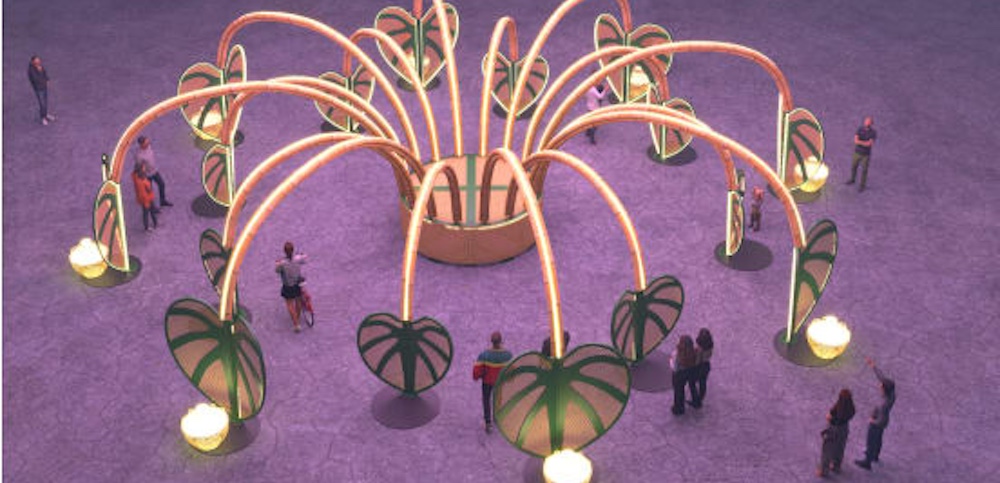
Image: Supplied/City of Sydney
An interactive public artwork celebrating Rohingya culture is set to be installed at Customs House forecourt to raise awareness for the world’s largest stateless population.
With the project taking over three years to arrange, more than 100 community participants and 20 artists have connected to create the project and bring the vision to life. The Meeras Pavilion is a part of the City of Sydney‘s Art and About program, creating thought provoking and sentimental art throughout the city scape.
Meeras Pavilion celebrates encourages people to gain a deeper understanding of the 1.2 million refugees who have escaped extreme violence and have been displaced from Myanmar since 2017.
The Rohingya has been described as one of the most persecuted minorities in the world, where they have extremely limited access to basic rights and services, including education, employment, healthcare and freedom of movement.
The pavilion will be driven through a series of community events, art, and advocacy from September 25th to October 5th. Including craft workshops, pop-up performances, panel discussions, a photo exhibition, storytelling, and a film screening, the project aims to be inclusive and diverse for all audiences.
The project fosters three main events that include:
- Meeras Public Program: a night of storytelling, performance and cultural celebration: Saturday 27 September & Saturday 4 October, 6pm – 7pm.
- Wandering: A Rohingya Story: presented by the Australia Global Health Film Festival: Thursday 2 October, 5:30pm – 9:00pm.
- Traditional Rohingya handcraft workshops: Saturday 4 October, 3:30pm – 5:00pm.
Created by Amigo & Amigo and with the bamboo expertise of Lucid Space Design, the Meeras Pavilion has been carefully crafted under a collective named the Creative Advocacy Partnership.
Simone Chua, director Amigo & Amigo said, “We are honoured to have collaborated so closely with the Rohingya community on this significant project.”
Designed through the use of a handcrafted bamboo banyan tree, it symbolises Rohingya’s long standing connection to our motherland and acts as a token of generosity where communities come together in unity.
Lord Mayor of Sydney, Clover Moore AO said, “This artwork is the result of extensive conversations between Rohingya artists, humanitarian organisations and creative collaborators.”
Through legacy they rebuild their history
Community members spent more than 100 hours at workshops in Lakemba and Marrickville since January, weaving panels to fill in the structures 16 taro leaves.
The taro leaves represent a cultural emblem of survival – where it is now recognised as a symbol of self advocacy, survival, and cultural pride. Through its emergence as a powerful metaphor for the Rohingya people who have had their history in Myanmar erased, it honours the communities footprint by telling stories, practicing culture and counting the legacy that they carry within them.
The woven leaves create a multi-sensory environment of light that captures the movement of water and a soundscape of cross-cultural music and performances.
The project has been c0-designed and produced by Rohingya and Australian artists, as well as partnerships with Rohingya communities in Sydney and refugee camps in Bangladesh and Malaysia.
The project’s advocacy partners include Médecins Sans Frontières, Refugee Council of Australia, Global Health Alliance of Australia, Asylum Seekers Resource Centre, Creative Advocacy Partnership, Australia Rohyingya Women’s Development Organisation, and Amnesty International Australia.