Australia’s Population Is Ever-Increasing – Is It A Solution, Or A Big Problem?
Image: REUTERS/Loren Elliott/AAP
Is being critical of increasing Australia’s population by importing economic migrants, those who simply seek better opportunities here, indicative of a racist mindset?
I certainly don’t think so. And I’m in good company.
Sir David Attenborough is one of the few public figures who argues cogently that the human species is breeding at an unsustainable rate. And nobody would dare call him a racist. Apart from the climate crisis, overpopulation is the biggest threat that the world currently faces.
Humans have indeed been increasing at an alarming rate. Since 1950 the world’s population has rocketed from 2.5 billion to today’s 8.2 billion.
Not only does this place an intolerable burden on the planet’s natural resources, through the loss of habitat due to human expansion, but it’s also directly responsible for the extinction of species. Human activities have significantly impacted natural habitats and wildlife worldwide, rendering ever more areas uninhabitable. Since colonisation Australia has lost at least 33 native mammal species.
In 1798 Thomas Malthus published a book “An Essay on the Principle of Population”, wherein he identified this accelerating pattern of increasing population size as “exponential growth”. Populations with seemingly unlimited natural resources grow very rapidly, after which population growth plummets as resources become depleted. Malthus said that the inevitable result is “misery and vice”.
Population explosions occur whenever nature and/or human endeavour creates an overabundance. Competition for scarce resources, with more animals squeezed into ever smaller spaces, inevitably results in malnutrition and disease. The resultant collapse is catastrophic. Pollution from all this human activity is also responsible for even more deaths of both terrestrial and marine species. Ironically the death toll also includes humans.
Jacques Cousteau is on record as stating, “Rain forests precede human habitation; deserts are what we leave behind”.
In 2025 Australia’s population now exceeds 27 million, having increased by a staggering seven million since 2005. Clearly our infrastructure hasn’t kept pace. It was unable to cope before the turn of the 21st century. It is beyond broken today.
There isn’t any argument that at present hospitals, schools, and both private and public transport networks, are simply unable to cope with the current demand. Logic suggests that by increasing the numbers of those seeking to utilise these services, there will be a further reduction in the ability of each of these areas to function effectively. And the level of service will continue to drop.
Waiting times in casualty departments will blow out even further. Hospital beds will be harder to find with greater numbers of patients released prematurely in order to make way for more life threatening cases. This is happening now.
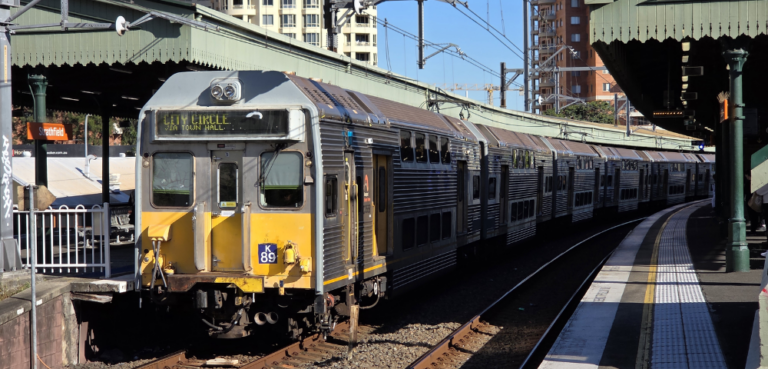
Some children will continue to spend their entire primary years in demountables, without ever seeing the inside of a real classroom. Those who reside in the less affluent parts of Australia’s capital cities, such as Sydney’s rapidly growing western fringe, are already poorly served with access to public transport. Employment opportunities will be even more fiercely contested.
Currently in Australia there are over 200 applications per job advertisement across platforms such as SEEK.
To those beyond our shores we appear as a huge, resource rich, underpopulated land mass. One that is desperately in need of people. Too many are ignorant of the fact that much of the continent is uninhabitable.
If an elevator has a capacity of twenty people and thirty squeeze themselves in, it won’t function. Its operational limits have been exceeded. What holds true for an elevator is also true for a hospital, a school and a transport network. It also applies to a household, a town, a country and to planet Earth. Each has a finite carrying capacity.
Nothing could be more insane than a blind belief that infinite growth is possible on a planet with finite resources. Growth is the byword of capital. All other considerations, the needs and aspirations of the community and especially the protection of the environment, are dismissed as being utterly irrelevant.
We all aspire to grow and develop. It’s what every parent wants for their children.
But the words “growth” and “development” have been hijacked. They’ve become the mantra of the moneyed class. Animals, nature, and those humans who can’t support themselves are simply impediments. They aren’t part of the “economic” solution – ergo they’re seen as a major problem, one to be dealt with as harshly as the survival of the fittest mentality, and the laws of the land will permit.
It’s a sad fact that Governments on both sides of politics are wedded to growth. This inevitably means more people. And in spite of what the conservative controlled media says, more people competing for access to the same services and employment opportunities is a major problem.
Those with the developer mindset would have us all believe that if you oppose immigration you’re automatically racist. This isn’t as you might think due to any altruistic or humanitarian concern. The environmental vandals know only too well that exposing this fallacy is a very real threat to their ability to turn the environment into dollars.
It’s all too easy to slap the racist tag on anyone who expresses concern that our infrastructure is demonstrably incapable of servicing our existing population, let alone another few hundred thousand imported each and every year.
Sir David Attenborough sees unchecked population growth as the biggest threat to the myriad species of the natural world, and to the humans who share their habitat. In his 2011 People and Planet speech he paraphrased President Kennedy’s environmental advisor, Kenneth Boulding who in 1966 said,
“Anyone who believes exponential growth can go on forever in a finite world is either mad, or an economist”.
Overpopulation is the principal driver of the climate crisis. That and human greed. Even primary school children are aware that the climate crisis is due to human activity, and that plant and animal species are continuing to die at an alarming rate. The lost biota are the canaries in the coal mine.
Glaciers that have been around for millennia are disappearing all over the world. Polar ice caps are shrinking at an alarming rate. Sea levels are rising, fresh water is more expensive than automotive fuel. Plastic is everywhere, even in human cells. The oceans are warming and marine species are dying in ever increasing numbers. Their loss has been directly attributed to the climate crisis. And this crisis is clearly due in no small measure to overpopulation.
All Australians have a right to education, health services, home ownership and employment, especially so our First Nations peoples, whose appalling treatment is a national embarrassment. Yet these essentials are denied to far too many of us.
It isn’t too late to demonstrate to the world that we know how to manage our natural and human resources. We have an ethical and moral responsibility to put our own house in order. To ensure that our infrastructure is capable of equitably servicing our existing population. And to expose the oxymoron of “sustainable growth”.
If we continue to allow Governments to ignore the natural world, and to artificially increase our population by importing huge numbers of economic migrants, regardless of their country of origin, then we do so at our peril.